Interior design styles are easier to recognize than to define. A curved line can separate Art Nouveau from Art Deco; pale ash from dark walnut can pull the same simple room toward Scandinavian or Mid-Century Modern. This guide puts 33 styles next to one another and names the visual clues that do the most work.
These are reference points, not sealed boxes. Most real homes mix several styles, and some categories exist precisely to describe a mixture. Start with the room's bones, then look at its furniture shapes, materials, palette, and density. Those four layers usually reveal the family resemblance.
Historical
Ornament, craft, and recognizable period forms are the vocabulary here.
Traditional
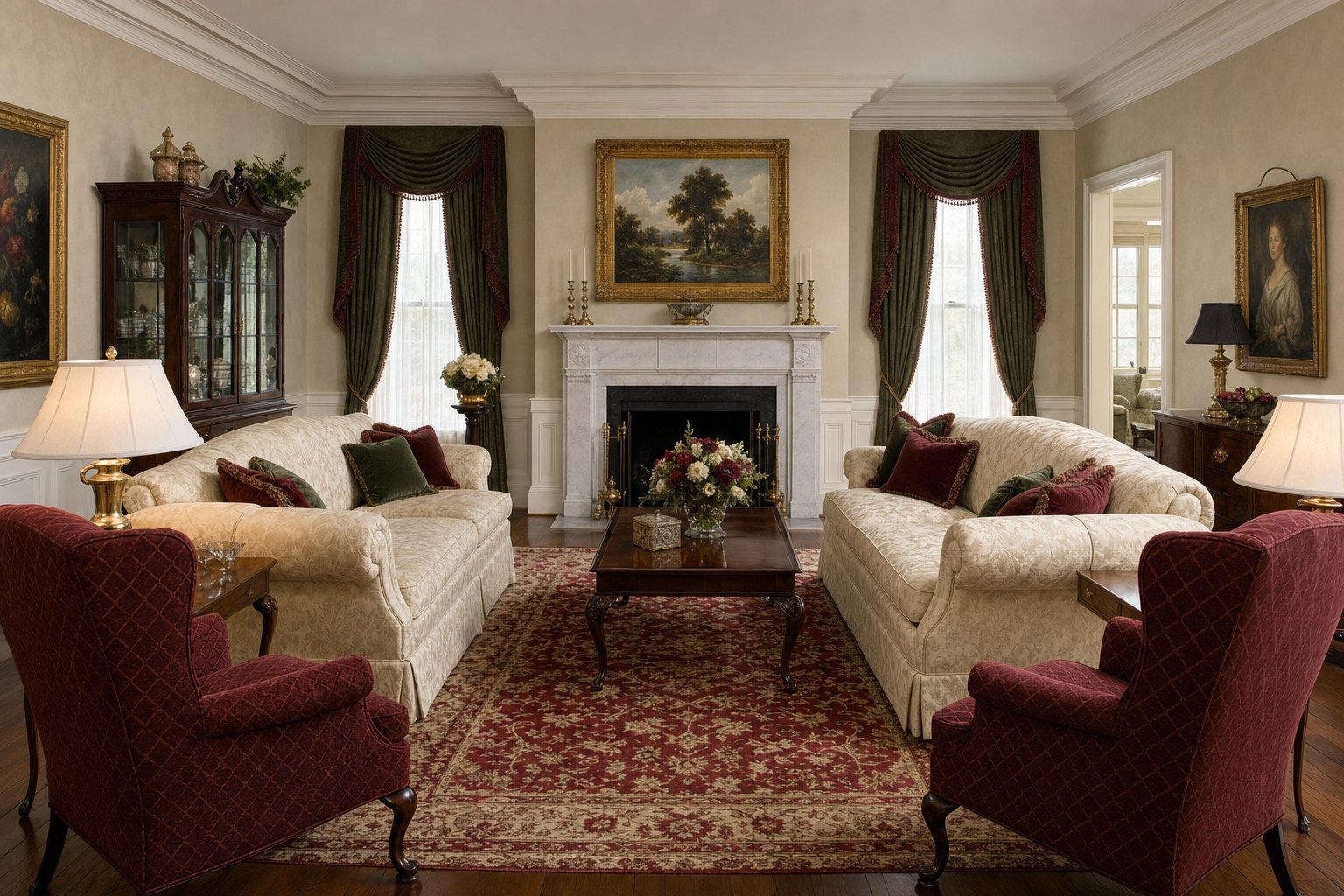
Symmetry · dark polished wood · classic furniture
Traditional rooms borrow from eighteenth- and nineteenth-century Europe: rolled arms, turned legs, crown molding, matched pairs, and a clear focal point. Burgundy, navy, brass, mahogany, and patterned rugs make the formality feel warm rather than stark.
Victorian
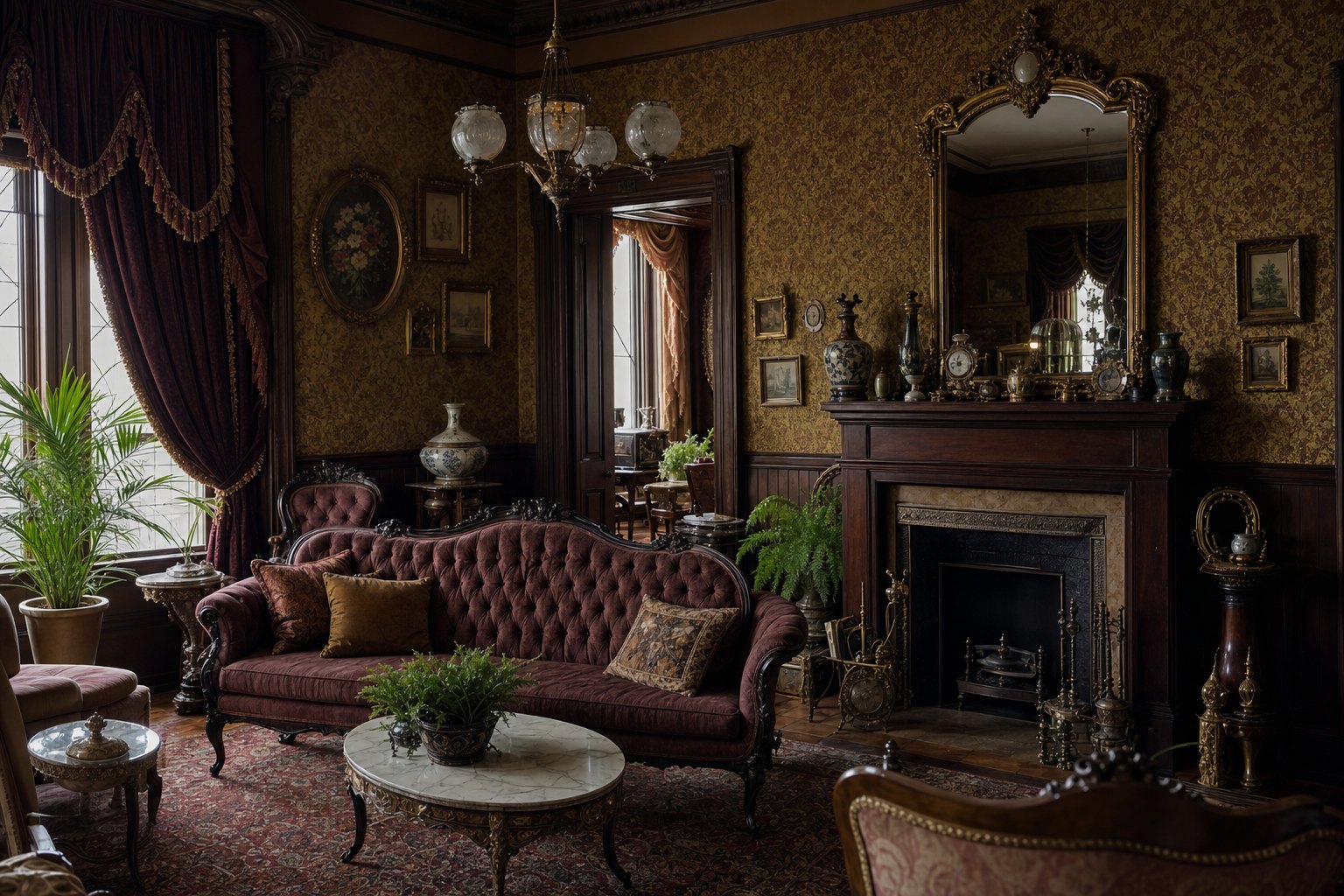
Layered pattern · deep color · ornament everywhere
Victorian interiors embrace the abundance made possible by nineteenth-century industry. Dark wood, tufting, fringe, patterned wallpaper, heavy curtains, plants, and collected objects fill nearly every surface in moody oxblood, forest, plum, and mustard.
Art Nouveau
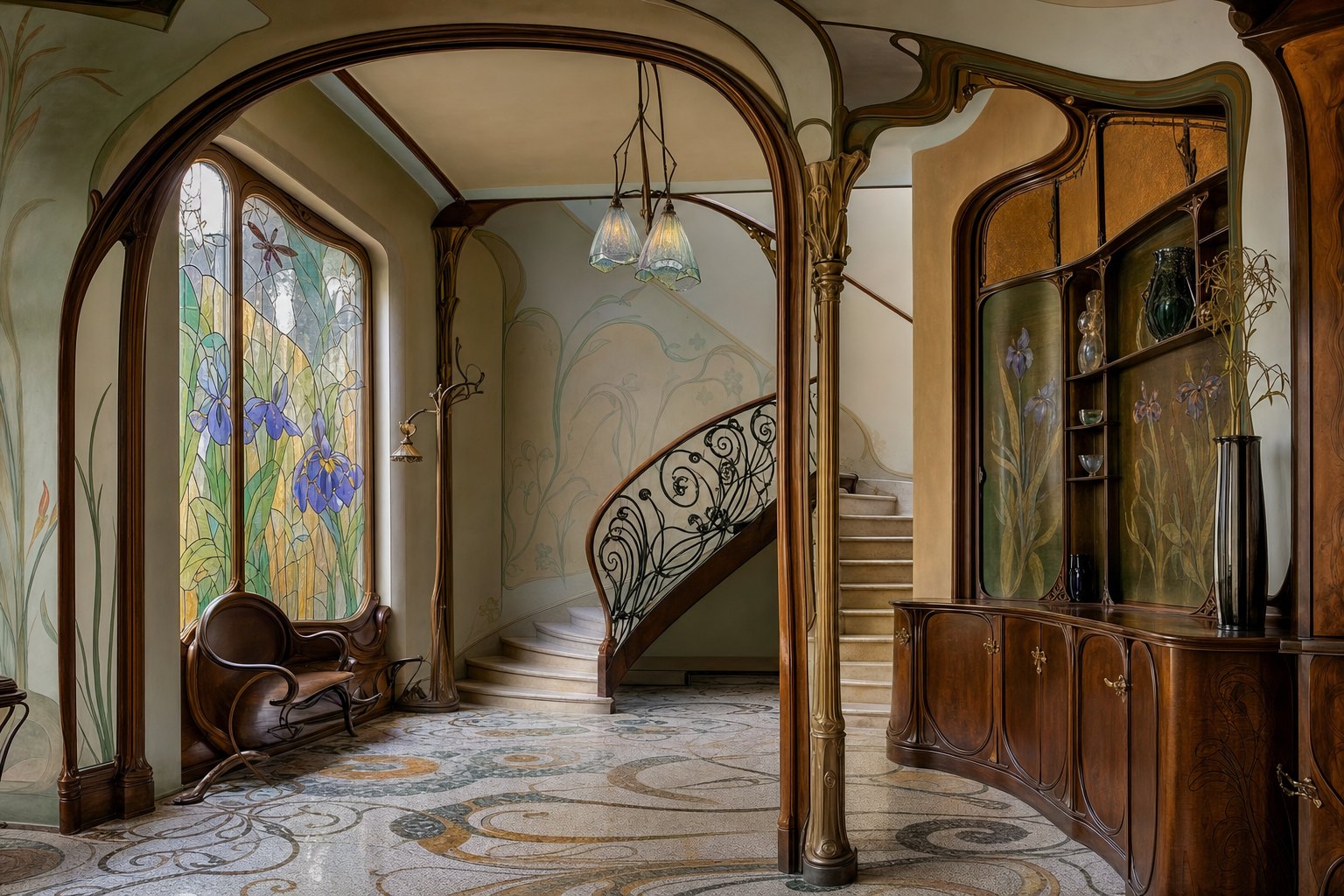
Whiplash curves · botanical motifs · total design
Art Nouveau turns architecture and furnishing into one continuous organic gesture. Stems, vines, stained glass, wrought iron, carved wood, and muted greens and violets replace historical motifs with lines that seem to grow through the room.
Art Deco
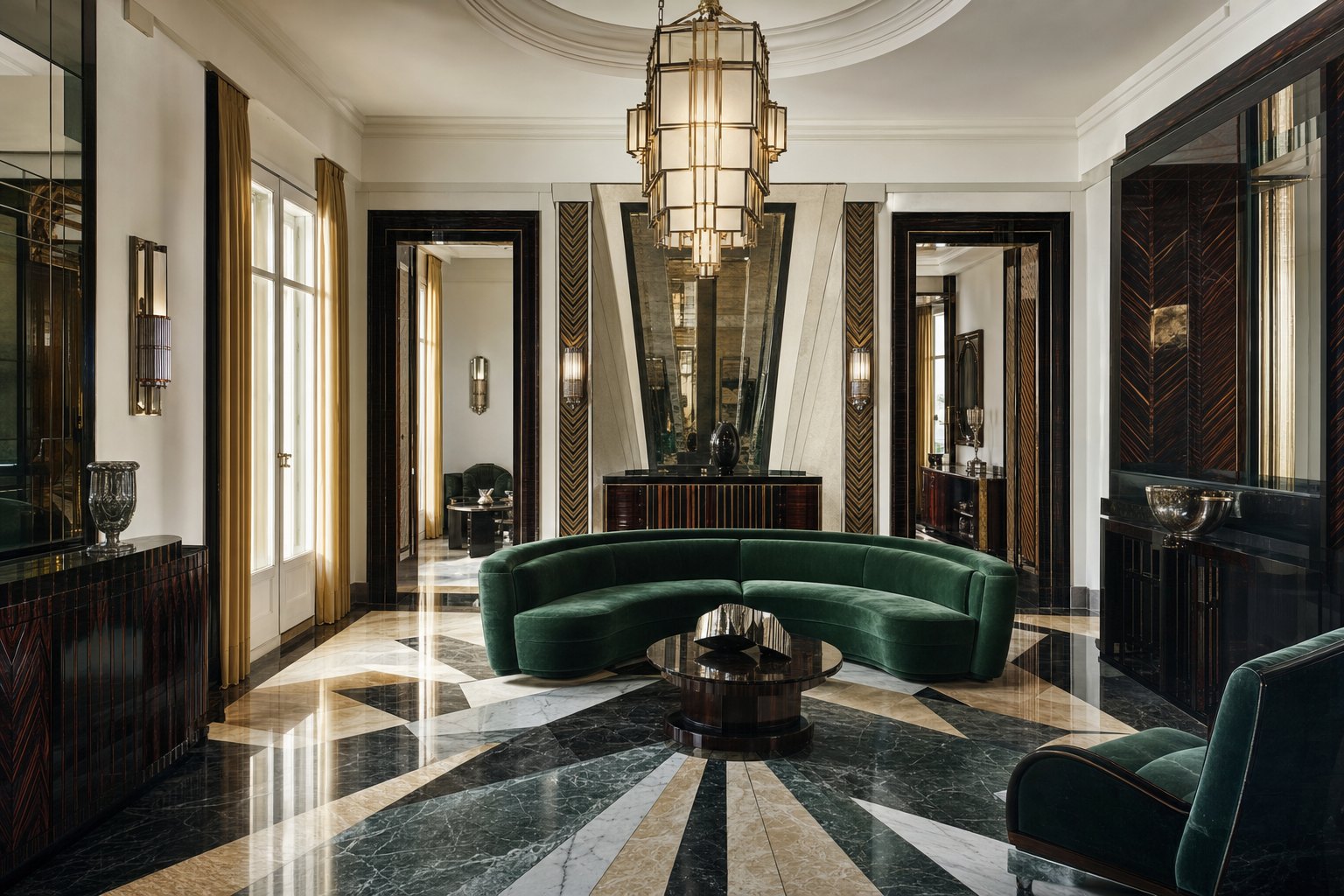
Stepped geometry · jewel tones · polished glamour
Art Deco is Art Nouveau's machine-age successor. Chevrons, sunbursts, fluting, lacquer, chrome, mirrors, marble, and exotic veneers create bold symmetry; emerald, sapphire, cream, black, and gold supply its confident theatricality.
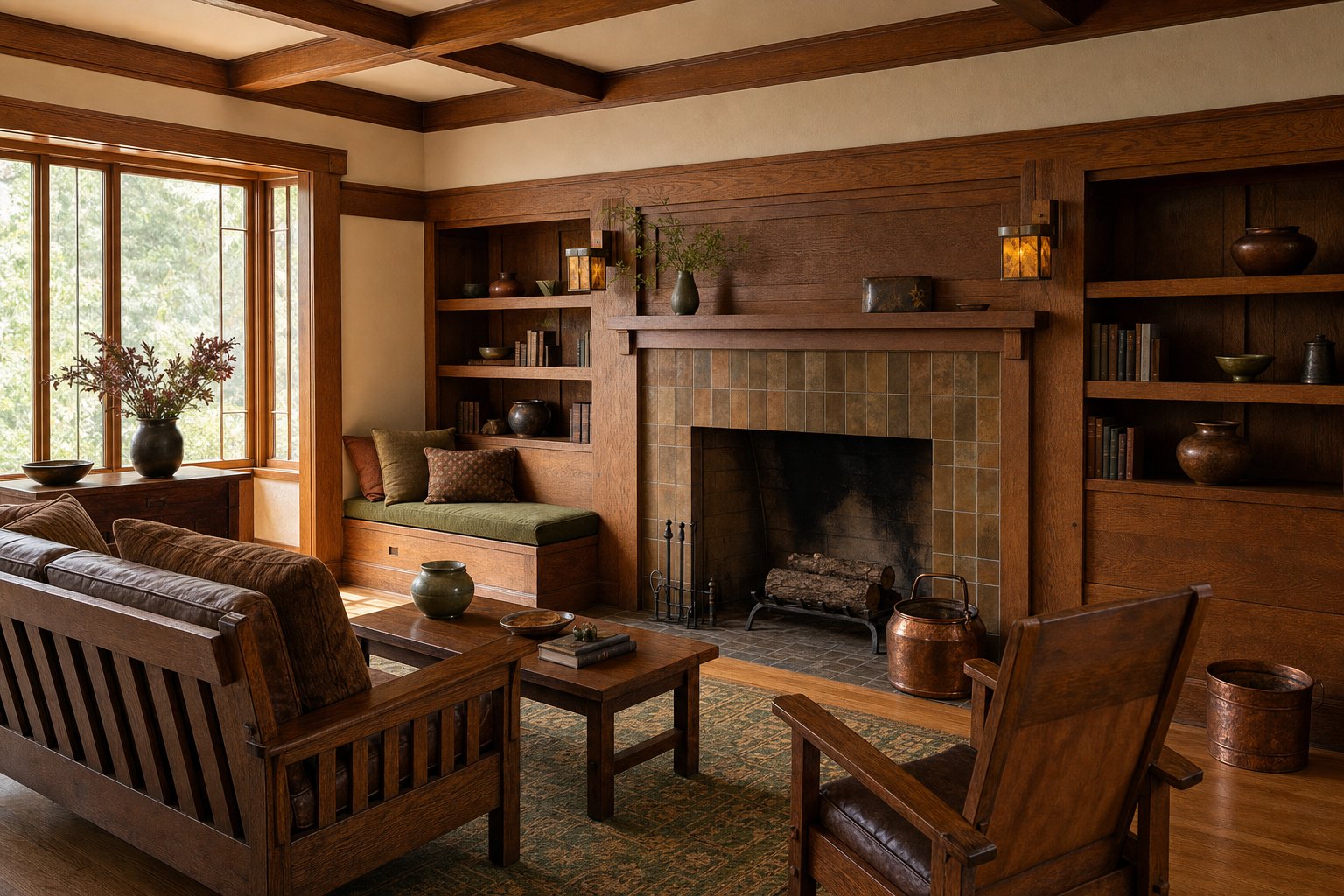
Arts and Crafts
Visible joinery · quarter-sawn oak · honest craft
Arts and Crafts answered Victorian excess with handwork and visible construction. Built-ins, through-tenons, oak, hammered copper, leaded glass, and matte tile sit low and solid in moss, ochre, russet, and umber.
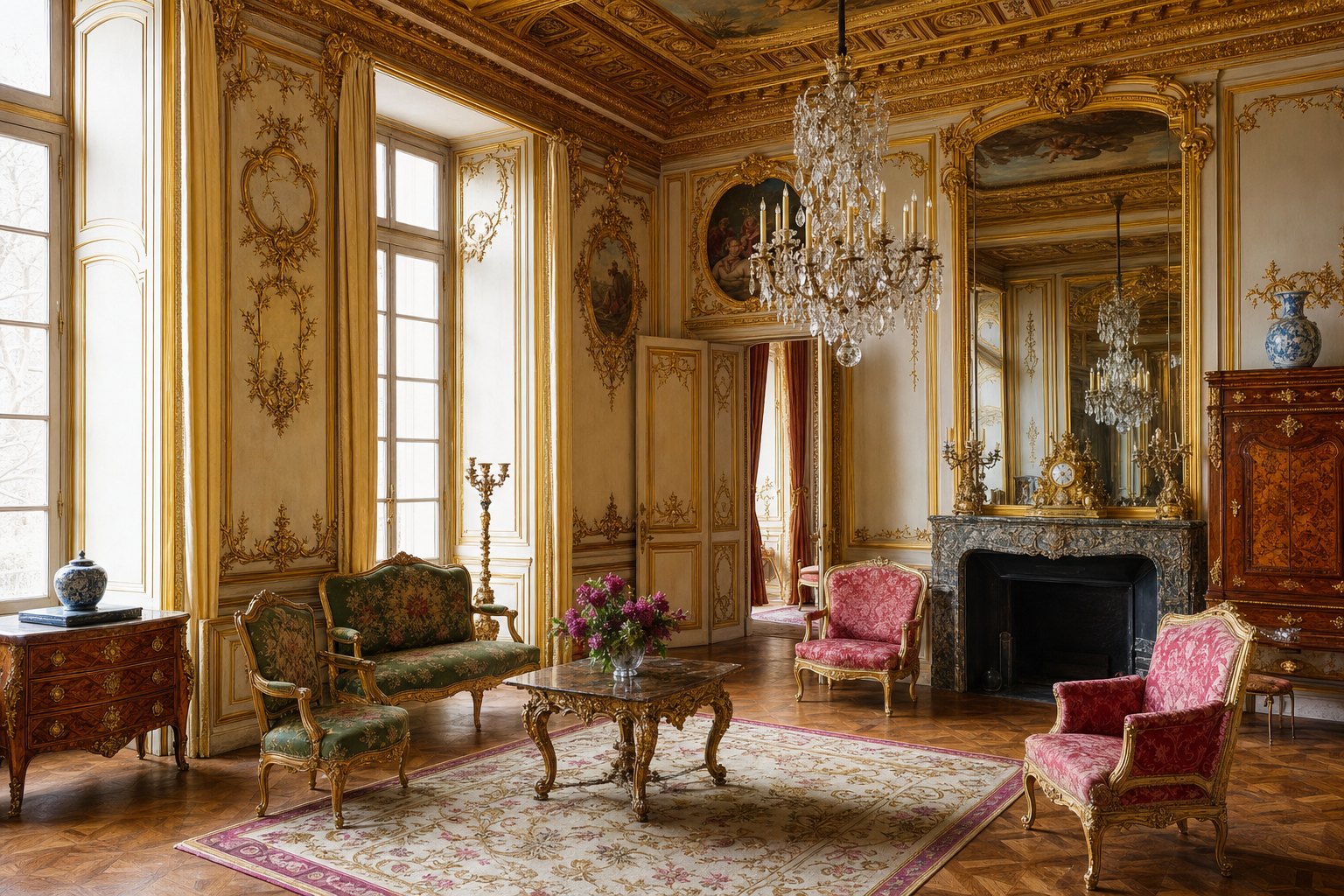
French / Baroque
Gilding · carved curves · aristocratic scale
Baroque and Rococo rooms are deliberately theatrical: gilded boiserie, frescoed ceilings, oversized mirrors, crystal chandeliers, marble, and silk. Cream and gold may be joined by jewel tones or powdery pastels, but reflection and ornament always lead.
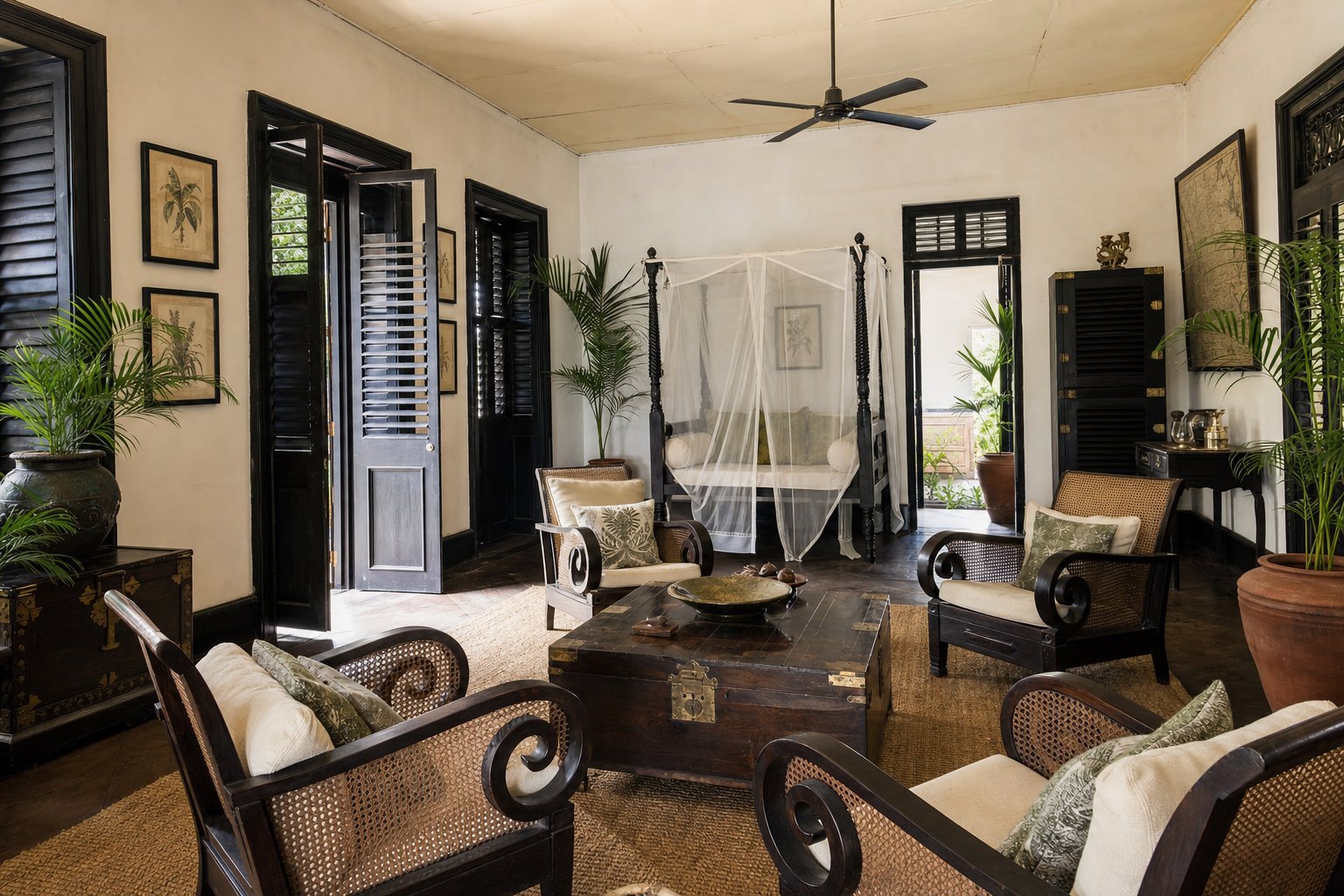
British Colonial
Dark wood · cane and rattan · tropical contrast
English proportions meet tropical materials in dark hardwood, pale plaster, campaign furniture, cane, shutters, ceiling fans, and palms. It is visually distinctive and also an artifact of empire; many contemporary versions are more honestly described as tropical traditional or tropical modern.
Modern & Mid-Century
Structure, function, and the removal of applied ornament connect these styles.
Modern
Open plan · unadorned planes · industrial materials
Modern means the twentieth-century movement, not whatever is current. Flat surfaces, low horizontal lines, glass, steel, plywood, concrete, and leather appear without disguise. Structure replaces ornament, often against a monochrome field with a primary-color accent.
Mid-Century Modern
Tapered legs · warm wood · organic silhouettes
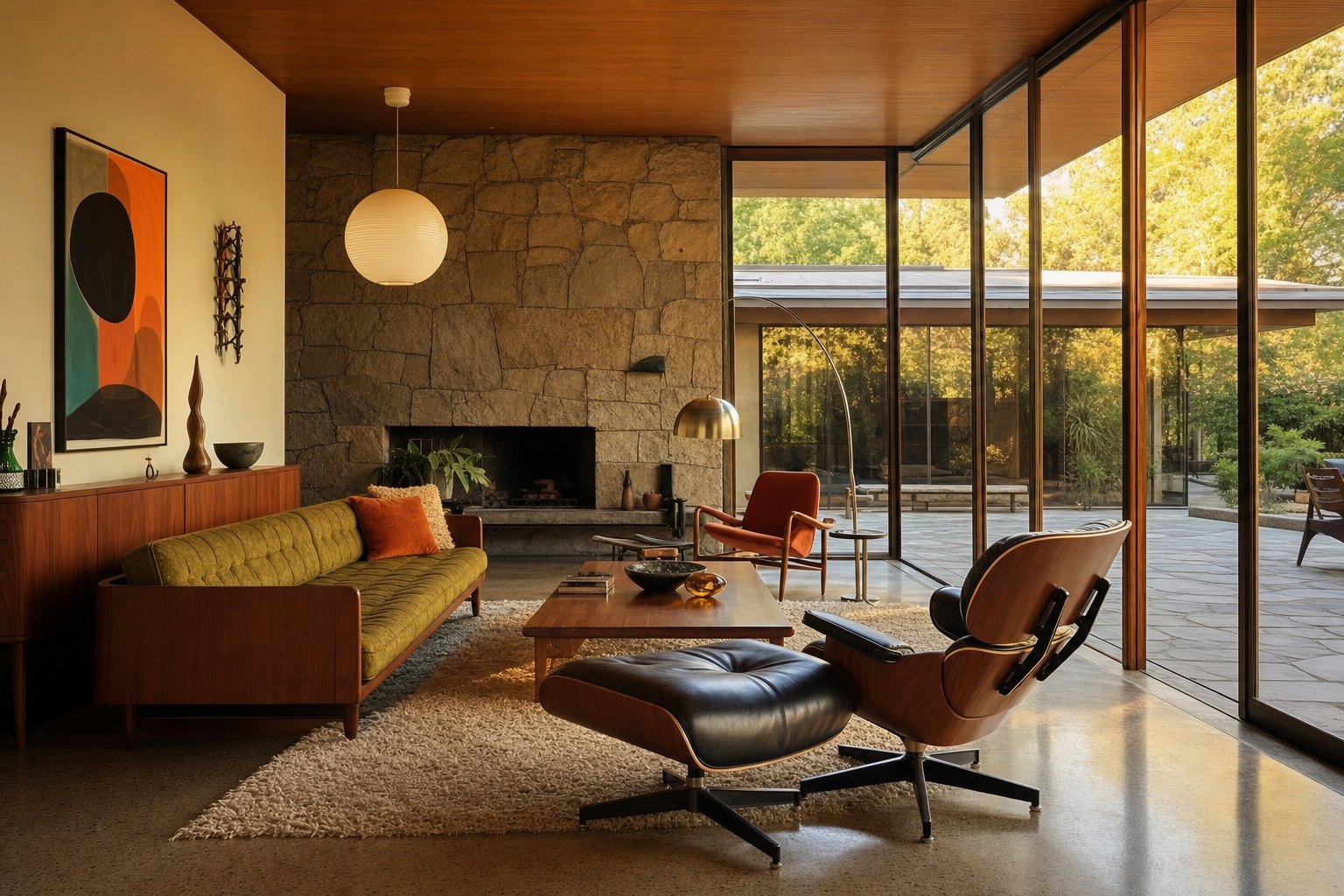
Mid-Century Modern softens modernism for postwar homes. Walnut and teak, molded curves, low profiles, broad windows, and mustard, avocado, orange, or teal make it warmer and more playful—and unusually easy to mix with other styles.
Contemporary
Current forms · soft curves · fluid borrowing
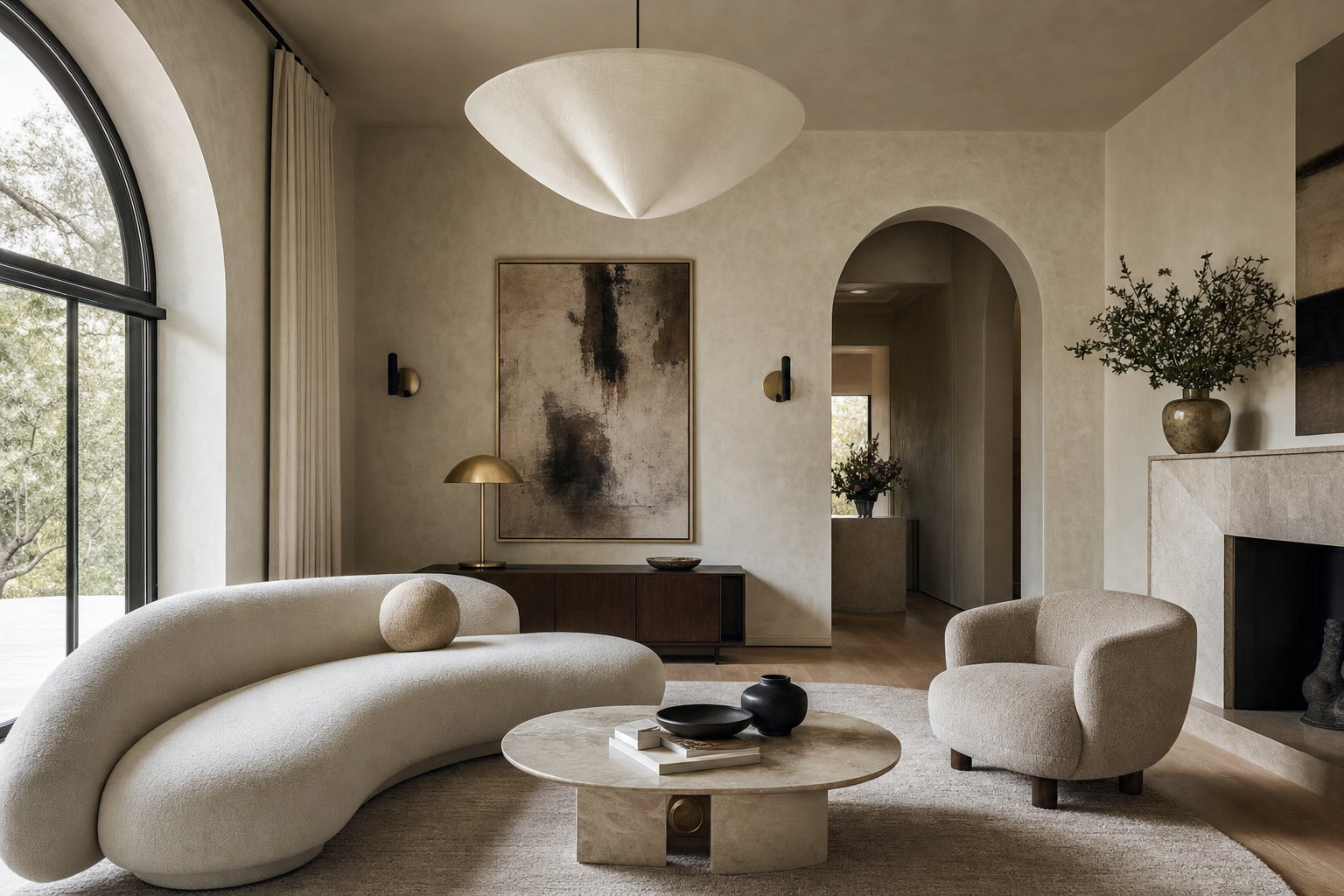
Contemporary is a moving target: it names what designers are doing now. Today that often means rounded silhouettes, warm neutrals, textured plaster, mixed metals, arches, and sculptural lighting. Unlike historical Modern, its rules change with the decade.
Minimalist
Negative space · concealed storage · exact restraint
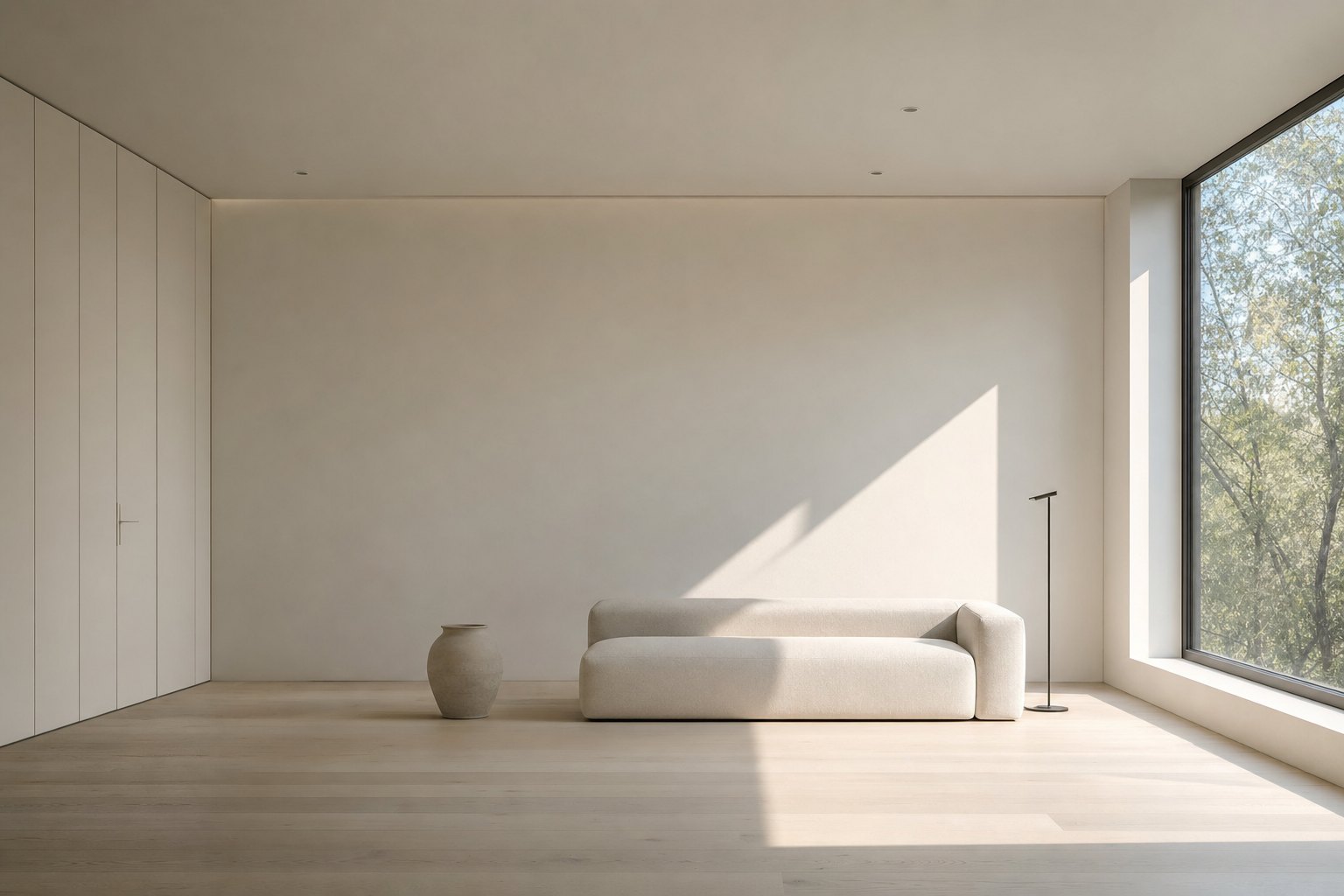
Minimalism removes visual interruption until light, proportion, and texture carry the room. The palette is narrow, storage disappears, and each remaining object must justify its place. Material quality matters because there is nowhere for weak details to hide.
Brutalist
Raw concrete · monumental mass · dramatic shadow
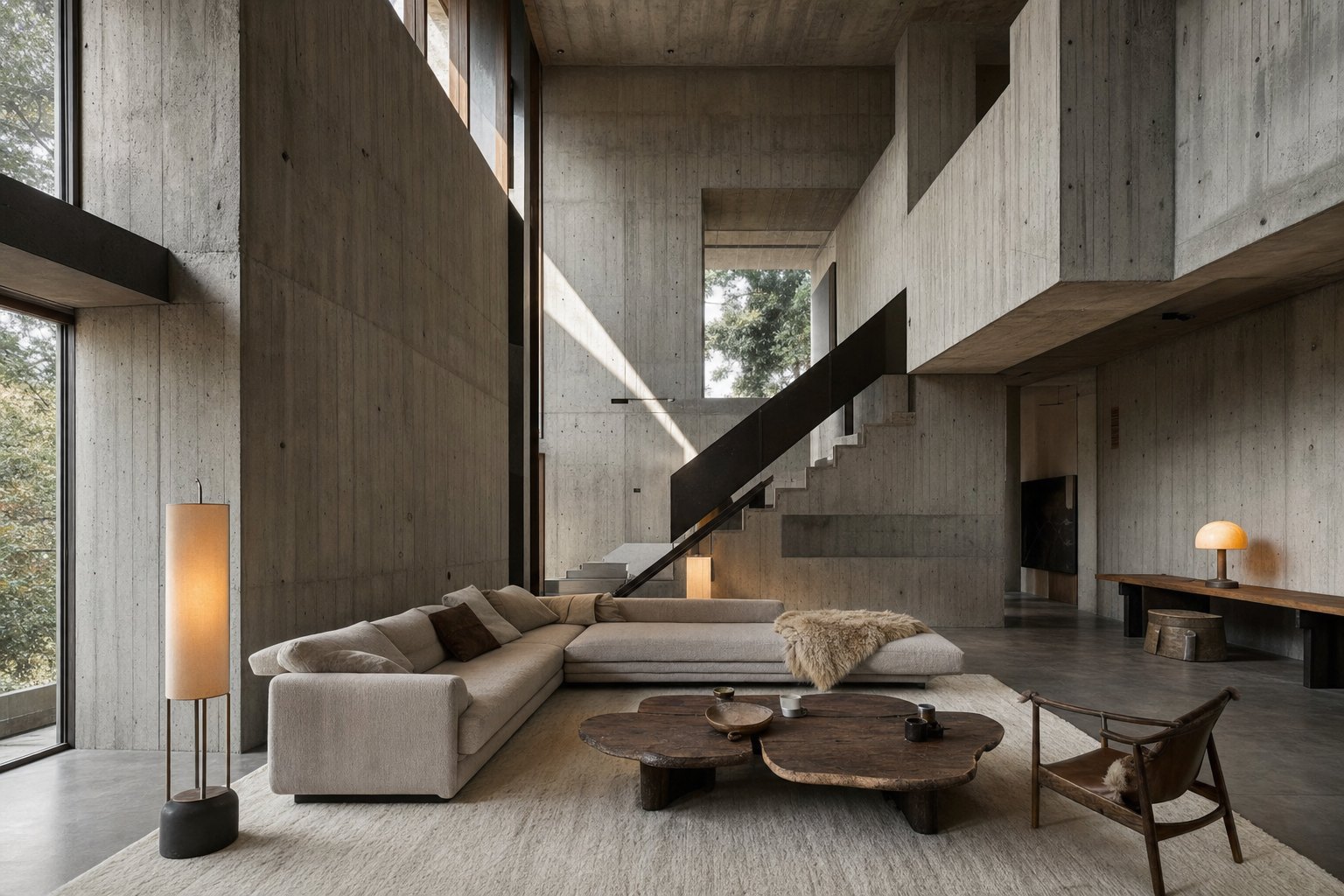
Brutalism makes raw structure the finish: board-formed concrete, exposed block, steel, and unfinished wood. In homes, wool, sheepskin, low furniture, and warm lamps soften the weight without concealing it.
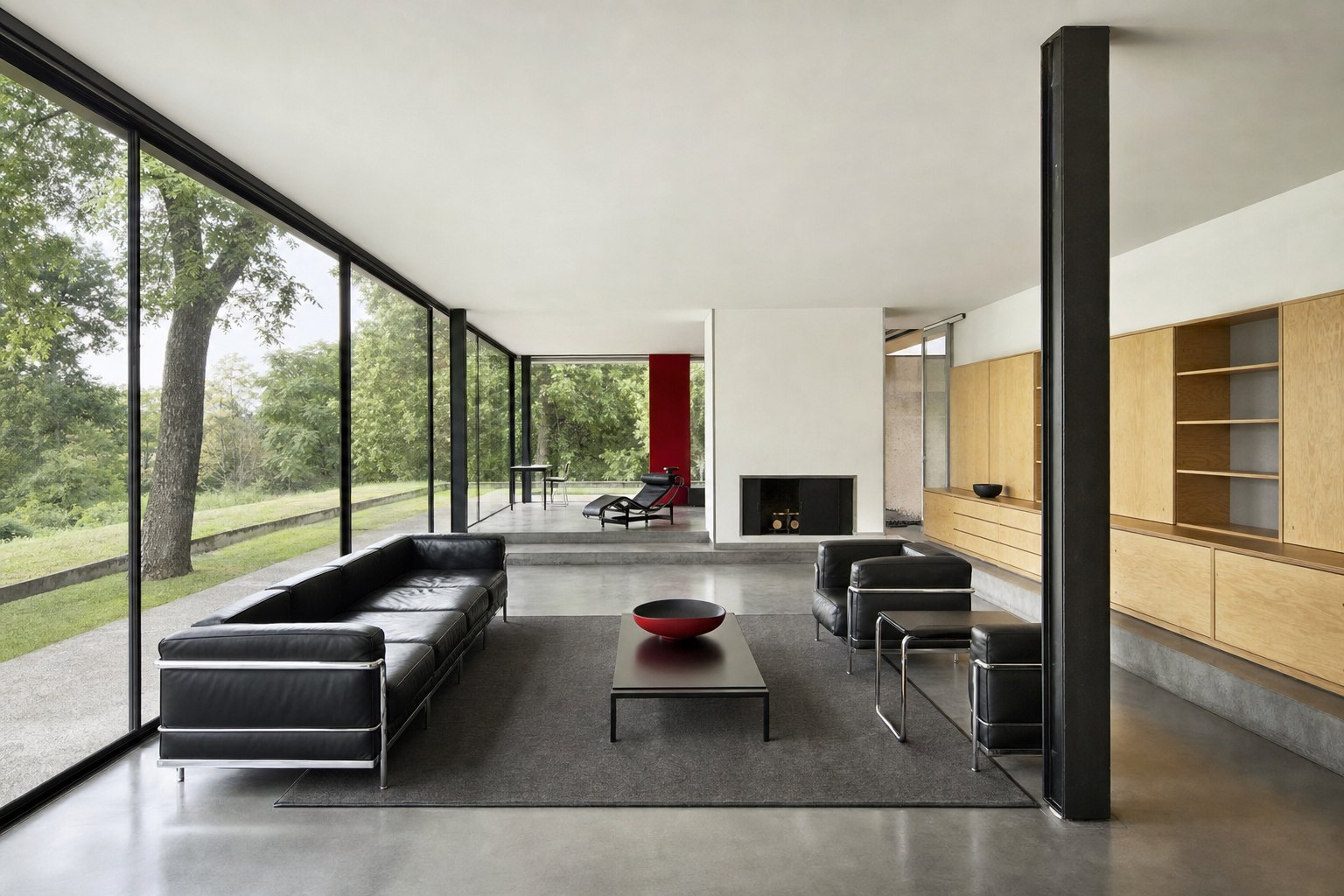
International
Glass volume · regular structure · no ornament
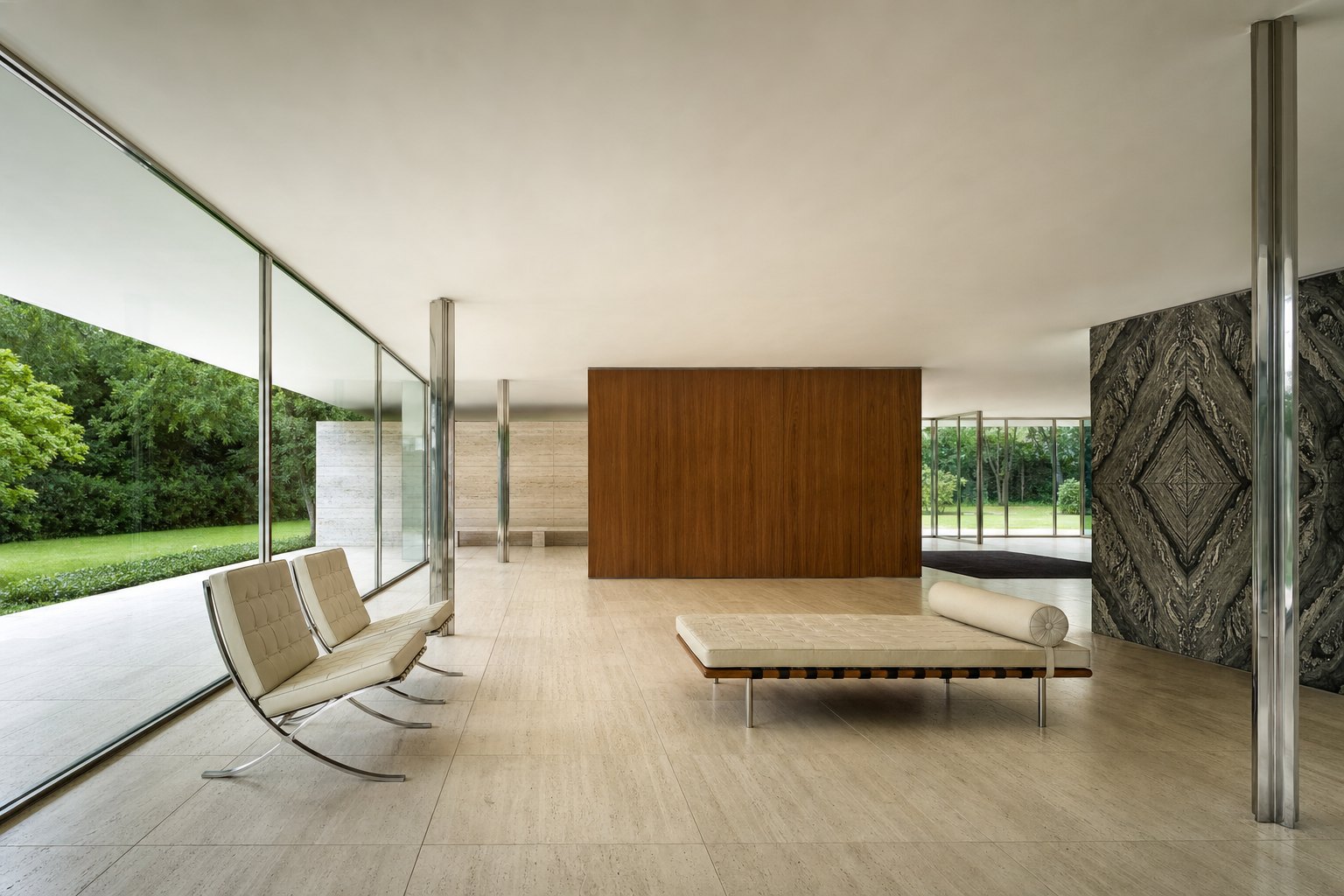
The International Style is modernism at its most doctrinaire: volume over mass, regularity over axial symmetry, and no applied ornament. Glass walls, columns, free plans, floating partitions, and isolated furniture turn the interior into continuous space.
Regional & Vernacular
Climate, local materials, and inherited building traditions shape the room before decoration begins.
Scandinavian
Pale wood · practical simplicity · tactile warmth
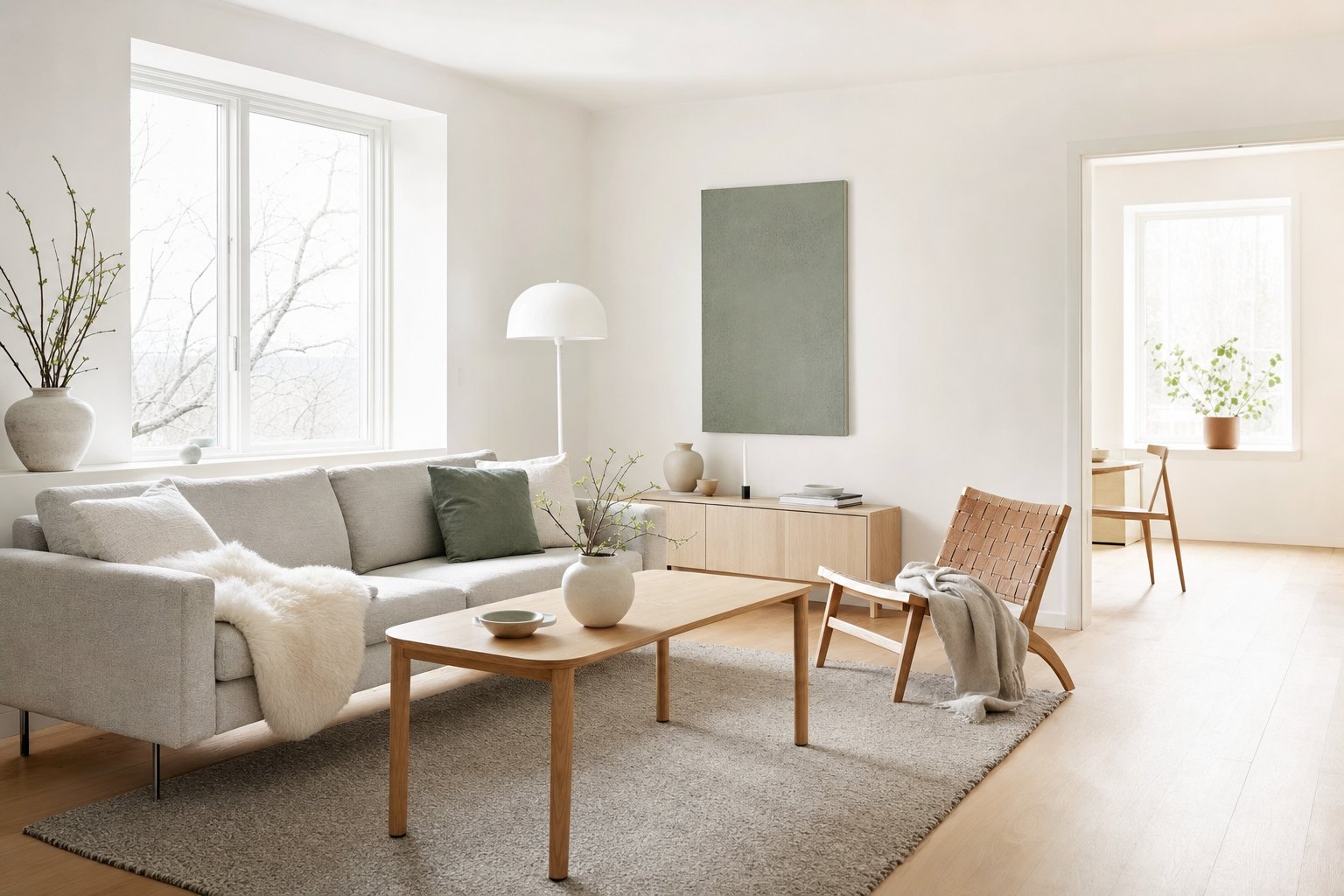
Scandinavian design answers long dark winters with white walls, ash, birch, or pine, minimal window treatments, and functional forms. Wool, linen, candles, and soft muted accents make it warmer and more forgiving than strict minimalism.
Mediterranean
Plaster and arches · terracotta · sun-bleached color
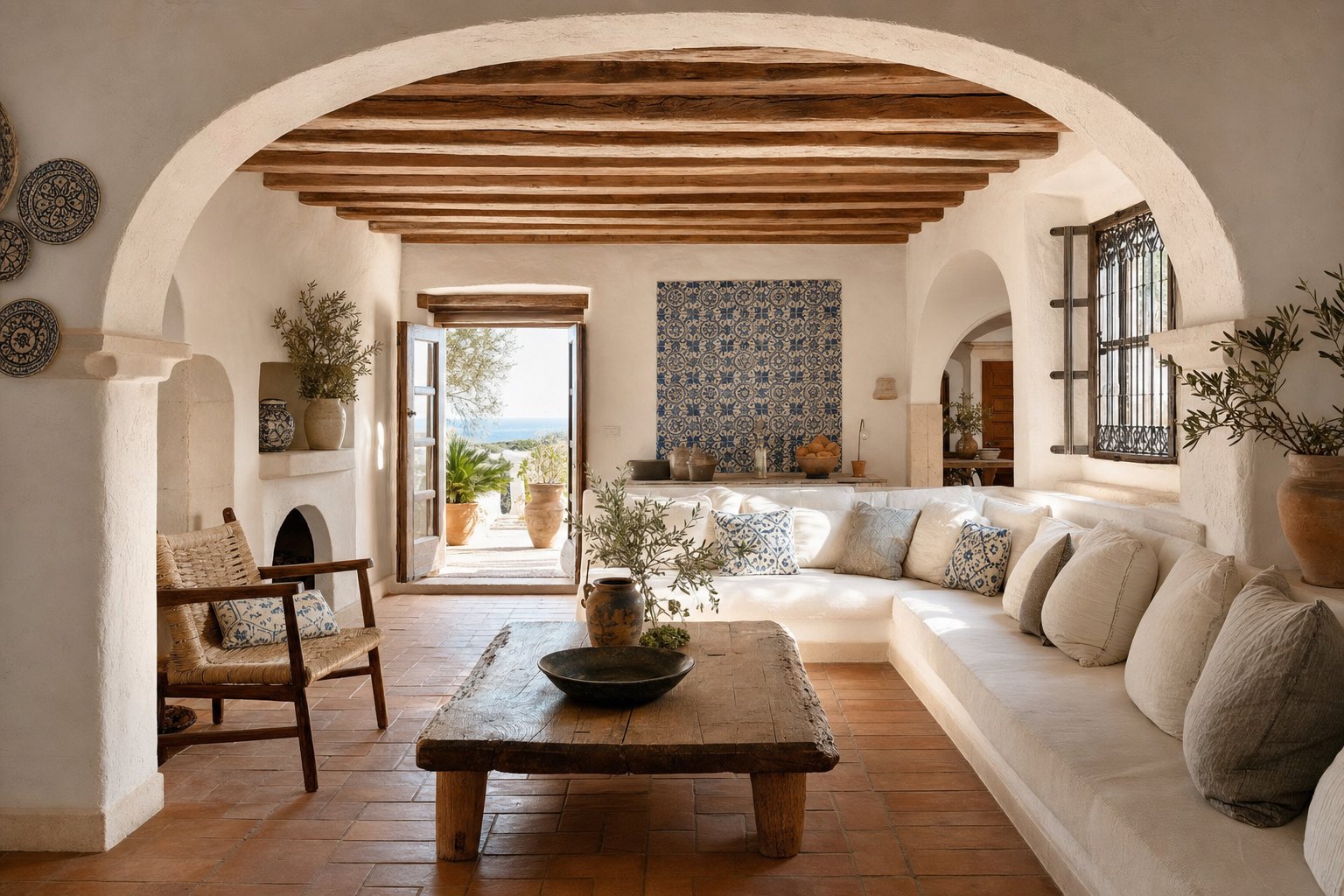
Mediterranean interiors grow from heat and coastal light. Thick plaster walls, deep windows, arches, timber, terracotta, iron, mosaic, and ceramics create shade and thermal mass in white, ochre, olive, clay, and sea blue.
Tuscan
Rough plaster · heavy wood · warm earth palette
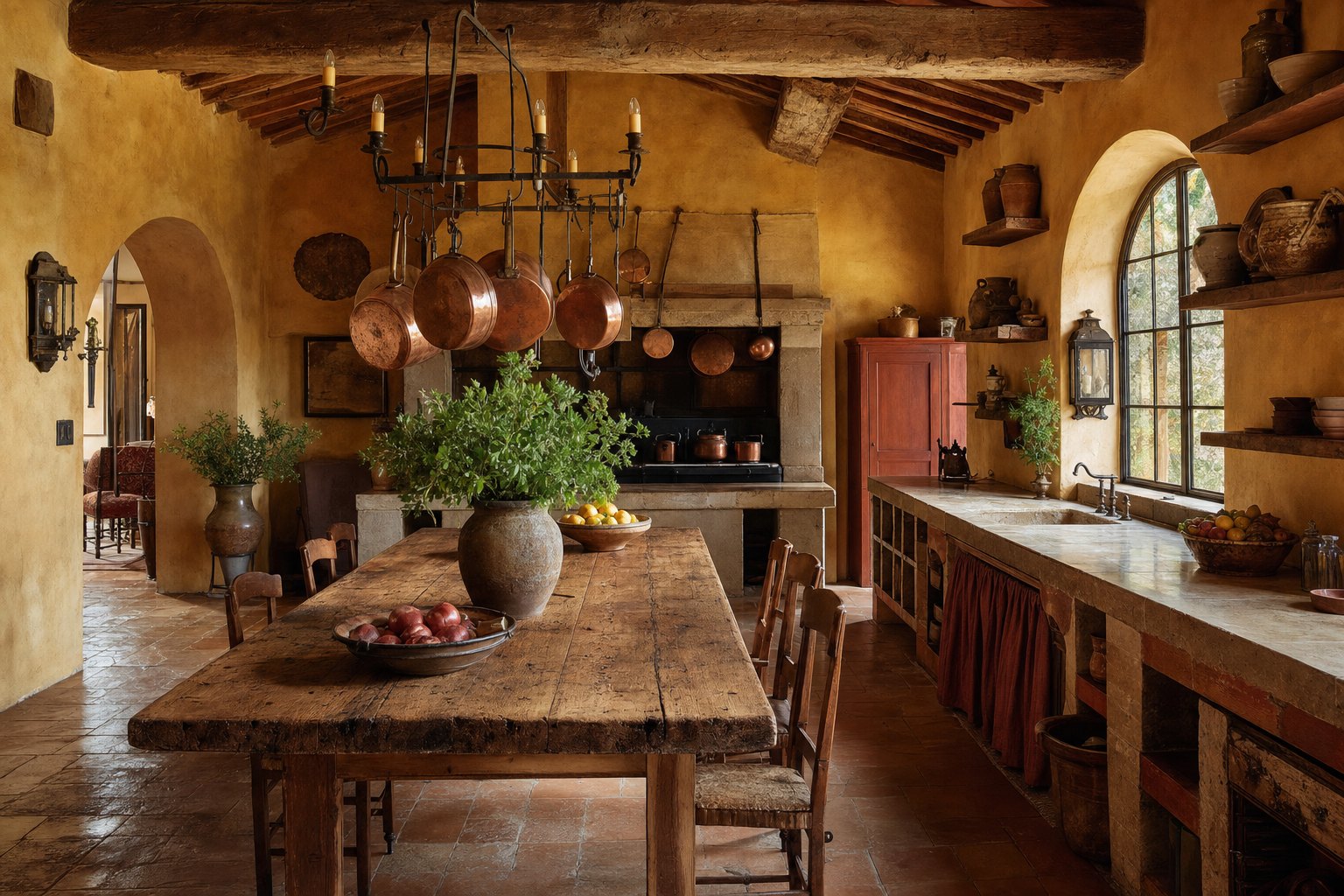
Tuscan turns Mediterranean style warmer, heavier, and more agricultural. Rough golden plaster, travertine, terracotta, hewn beams, forged iron, copper, and oversized wood furniture gather around kitchens in olive, wheat, rust, and deep red.
Southwest
Adobe forms · desert color · woven geometry
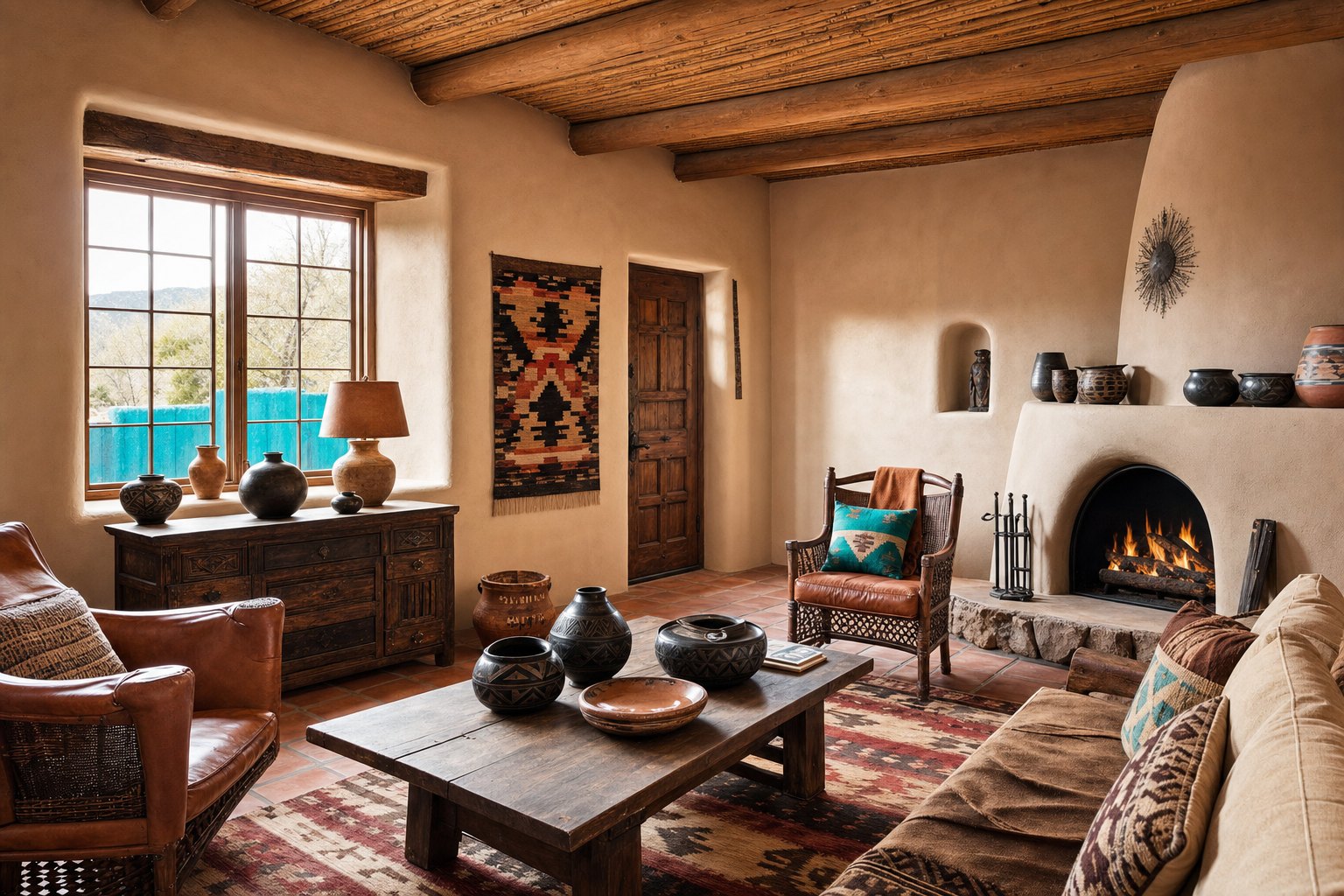
Southwestern interiors draw from Pueblo, Spanish Colonial, and Mexican traditions. Rounded plaster, vigas, Saltillo tile, kiva fireplaces, carved wood, pottery, and woven textiles use sand, terracotta, sage, turquoise, and sunset red.
Coastal
Light and air · washable linen · sea-glass color
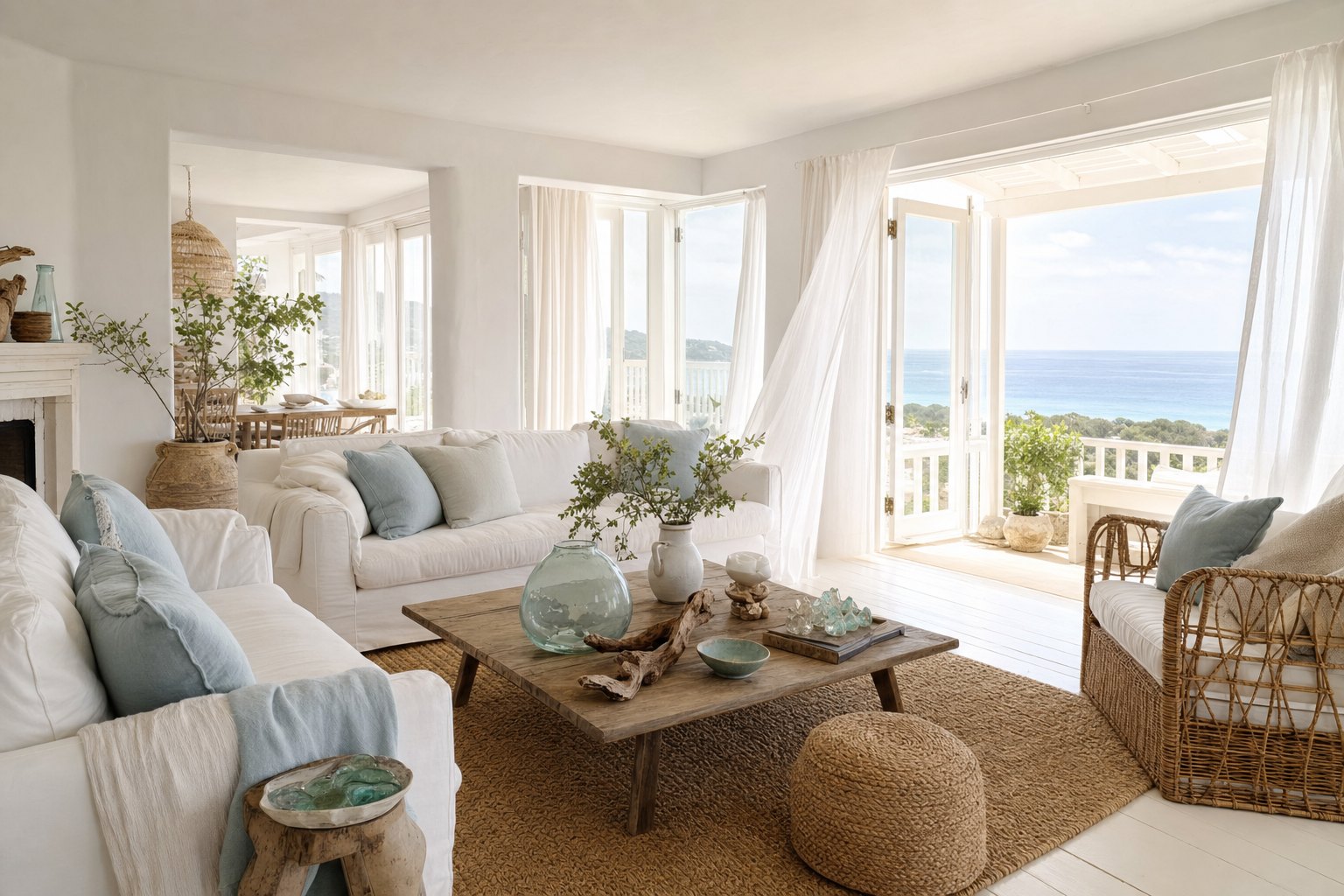
Coastal design evokes a shore without decorating with anchors. White walls, pale floors, slipcovered linen, sheer curtains, rattan, jute, and watery blue-green accents let natural light act as the primary material.
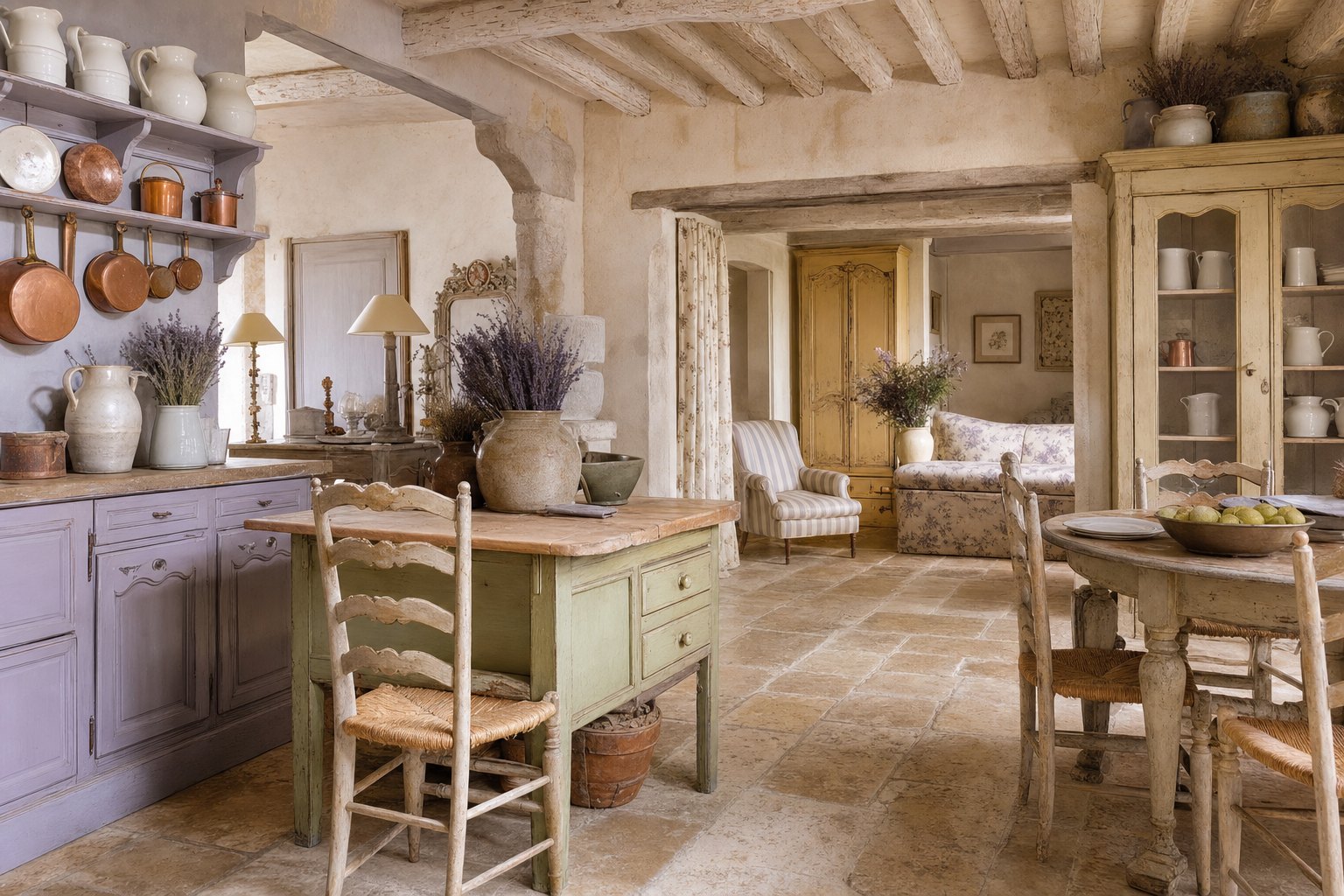
French Country places softened Louis XV curves inside a Provençal farmhouse. Limestone, beams, toile, rush seats, copper, and distressed paint feel refined but weathered, in sun-faded cream, lavender, yellow, sage, and washed blue.
English Country
Floral layers · books and antiques · inherited comfort
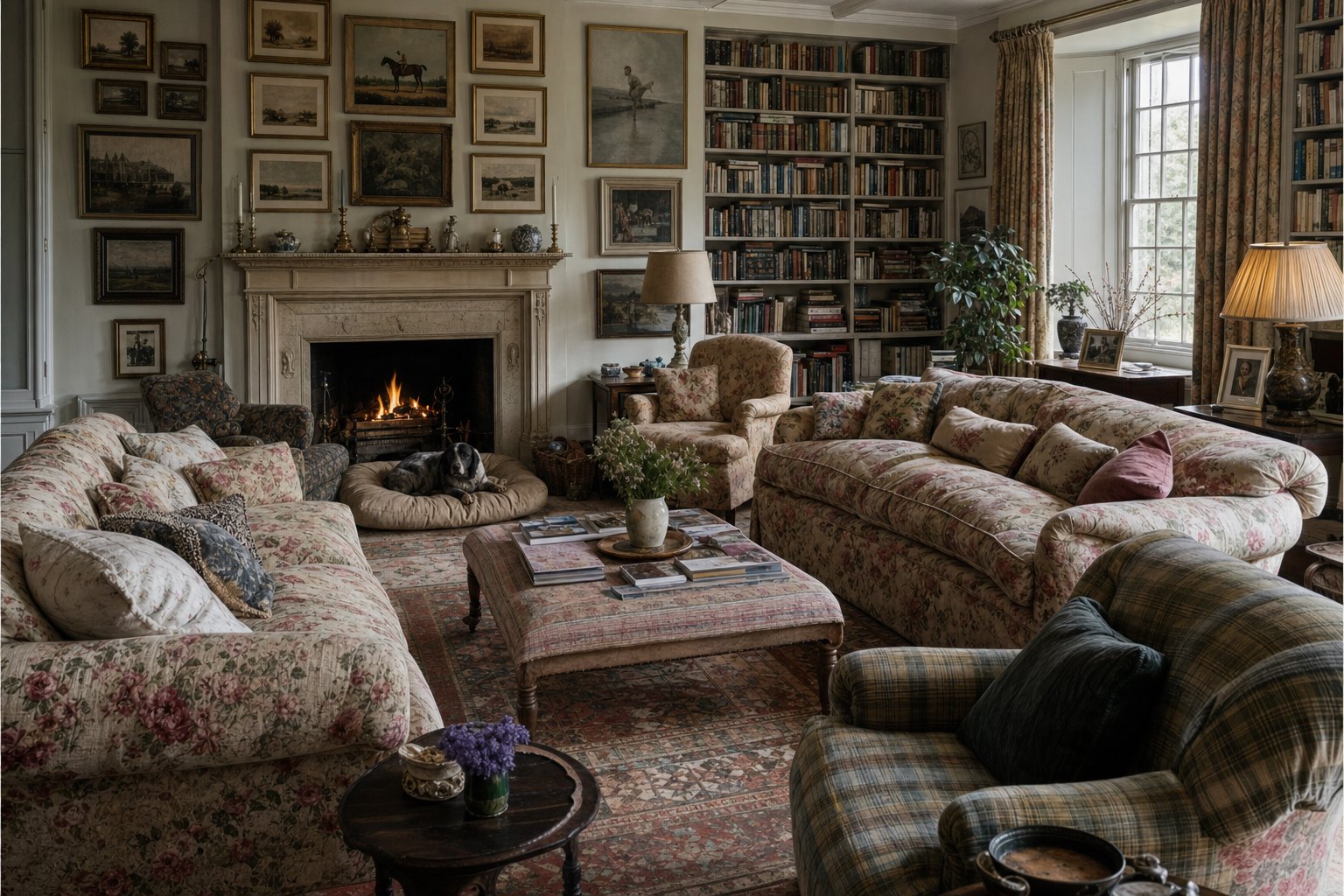
English Country looks accumulated rather than installed. Chintz, plaid, deep sofas, books, mismatched antiques, gallery walls, layered rugs, lamps, and dog beds fill the room in faded rose, ochre, sage, and cream.
Japandi
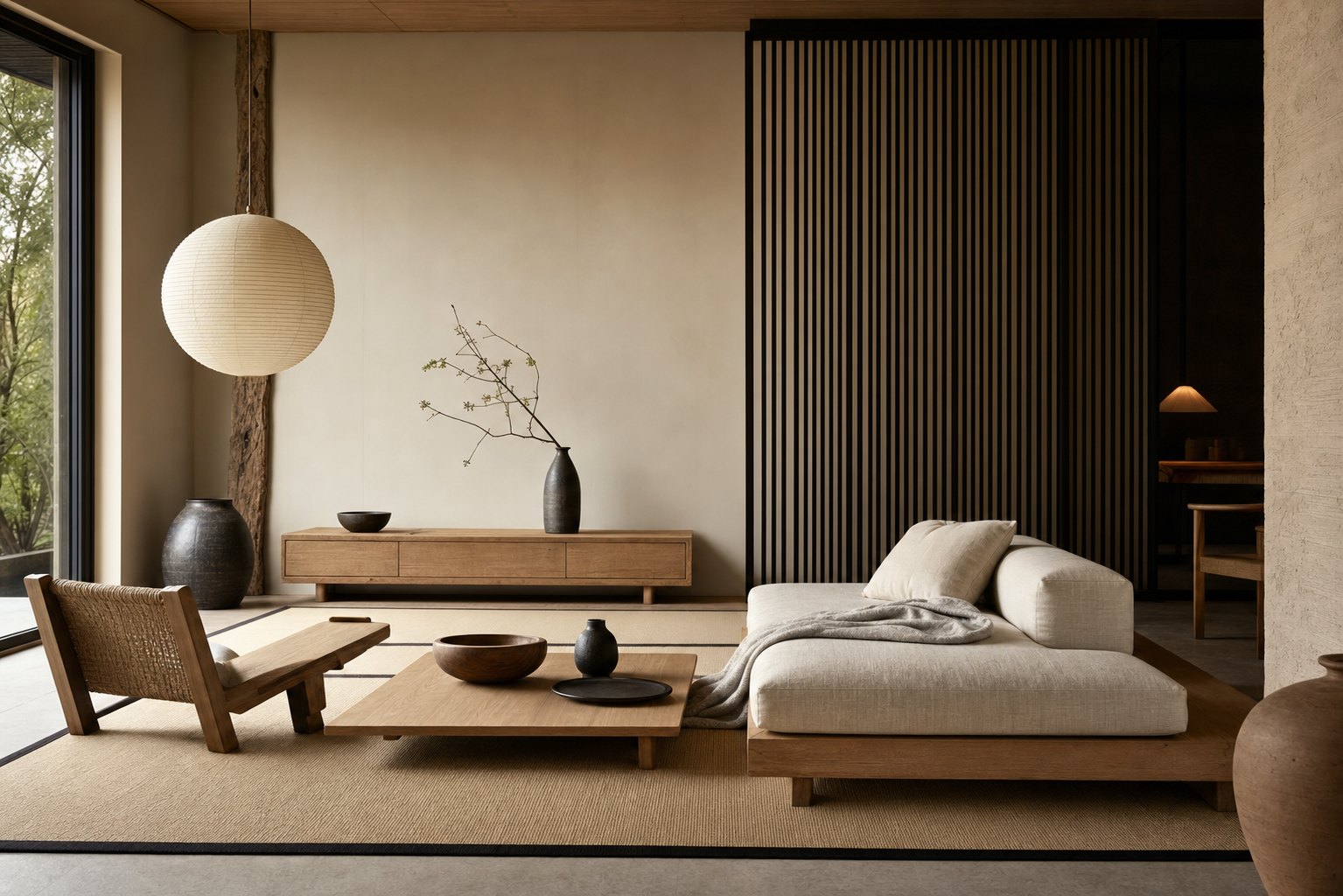
Low forms · quiet craft · light wood with dark accents
Japandi joins Japanese wabi-sabi to Scandinavian functionalism. Both value natural material, craft, and restraint; low asymmetrical forms, imperfect ceramics, charcoal accents, pale wood, linen, and practical storage give the hybrid its distinct calm.
Rustic & Casual
Natural materials, comfort, and visible wear loosen the formality.
Modern Farmhouse
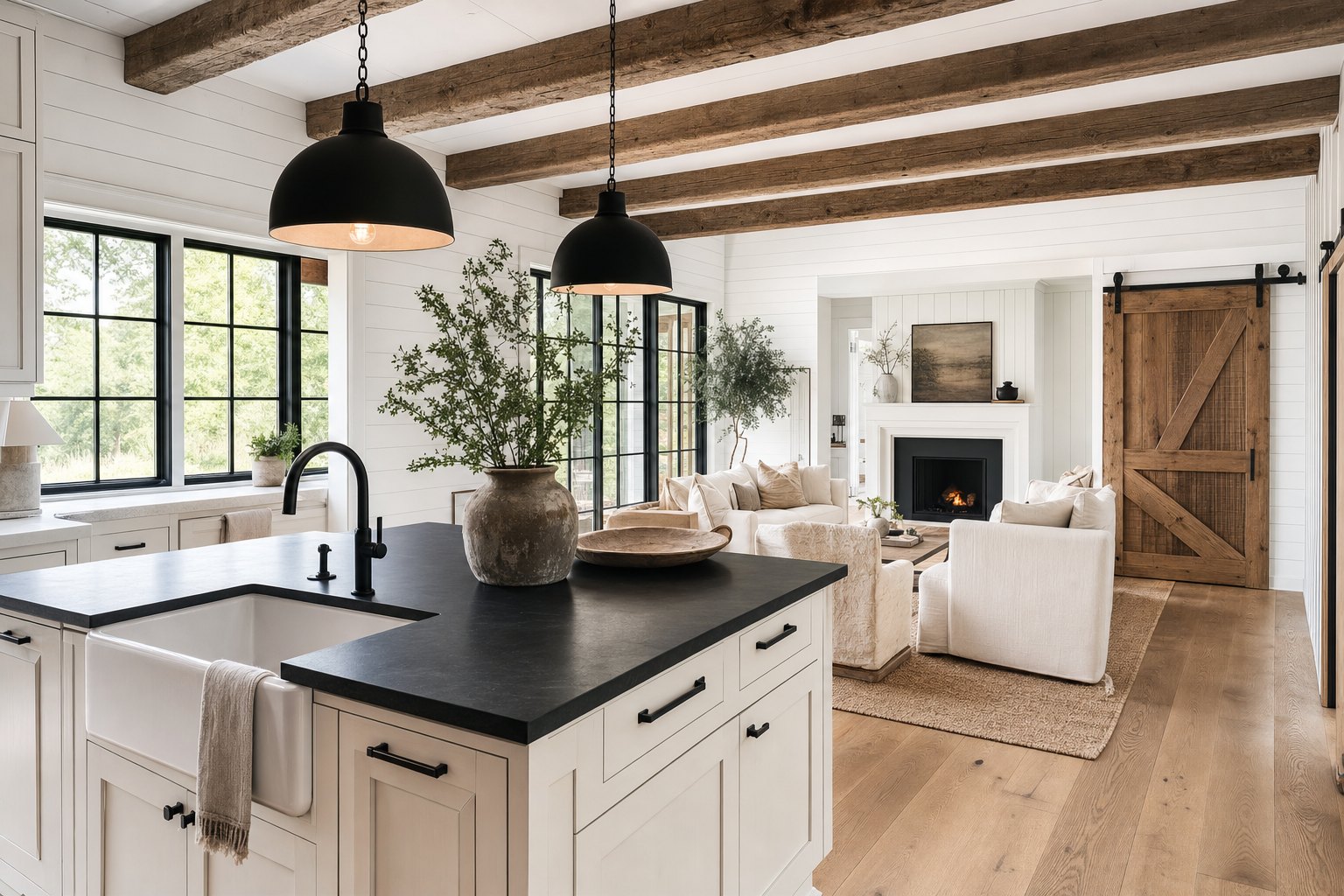
White and black · agricultural references · clean comfort
Modern Farmhouse cleans up rural references for contemporary open plans. Shiplap, apron sinks, black windows, reclaimed beams, board-and-batten, white paint, and warm wood pair with large comfortable furniture and crisp contrast.
Cottage
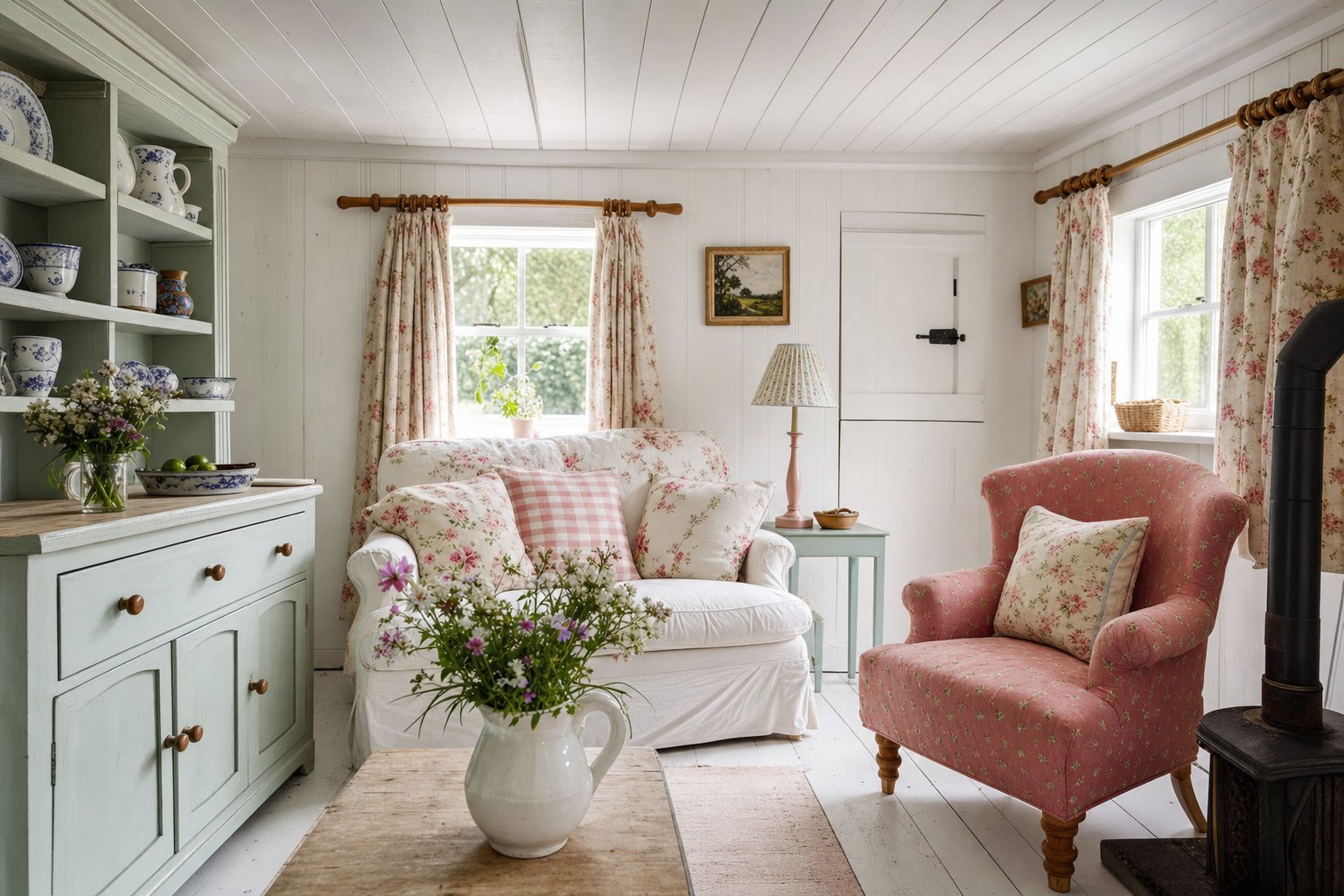
Small scale · painted surfaces · cheerful pattern
Cottage style is modest, bright, and informal. Beadboard, painted floors, floral and gingham textiles, open shelves, visible dishware, and pastel furniture are sized to small rooms rather than made grand.
Shabby Chic
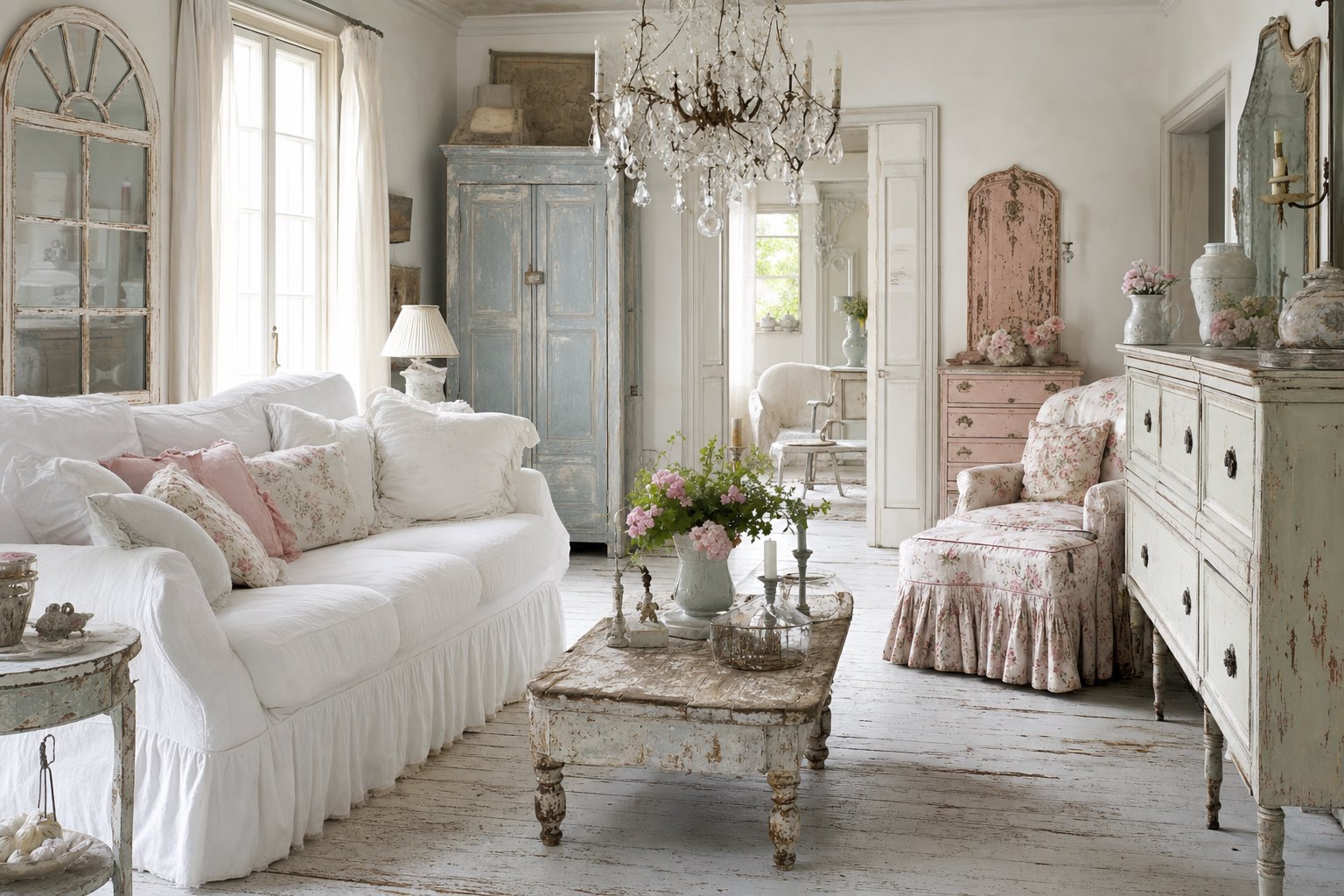
Distressed paint · faded florals · romantic white
Shabby Chic makes wear the central decorative device. Chippy white furniture, faded floral cotton, slipcovers, tarnished metal, and salvaged-looking pieces stay inside a soft palette of cream, blush, pale blue, and green.
Rustic
Timber and stone · rugged craft · landscape colors
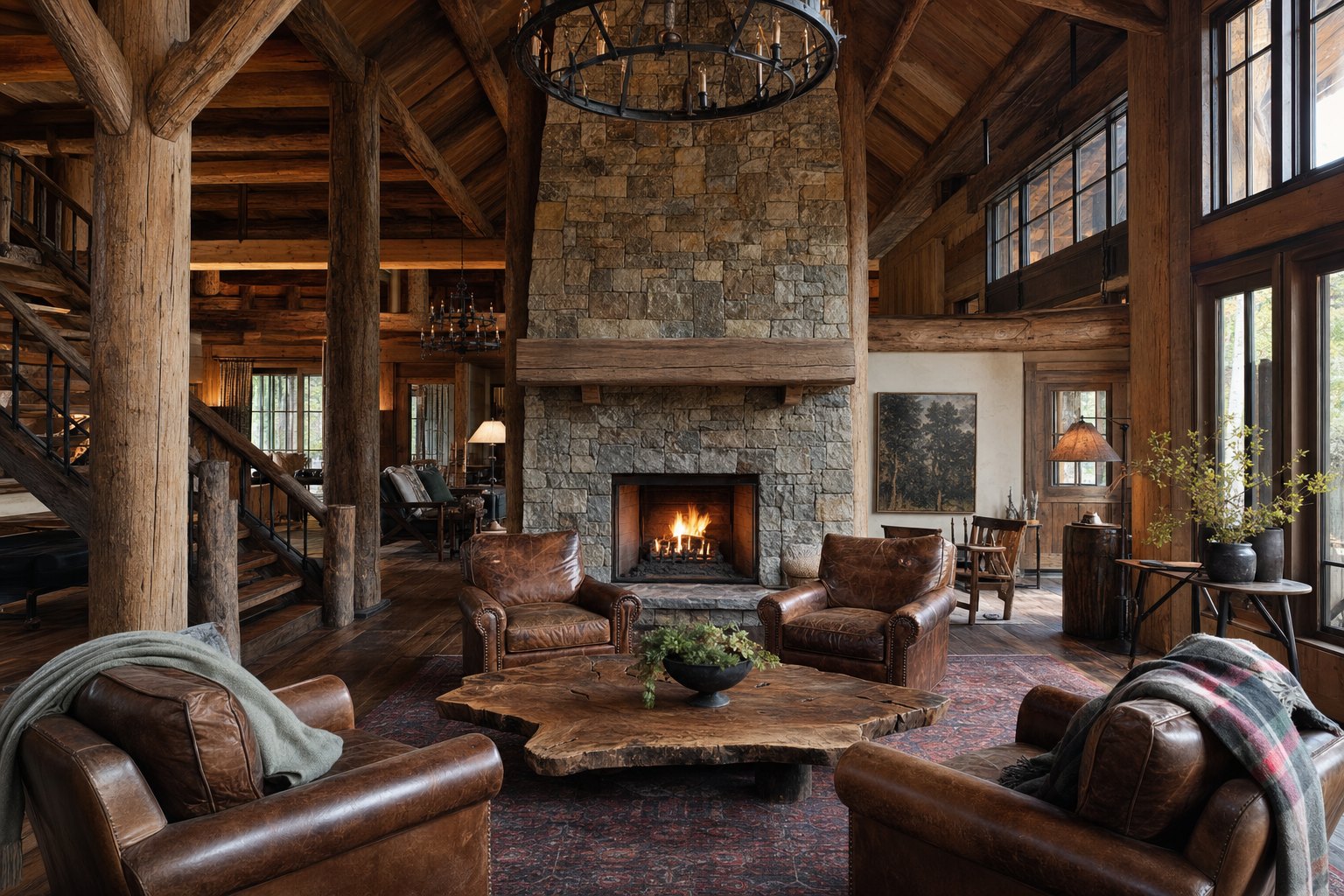
Rustic interiors show natural material at full scale: log or timber structure, exposed stone, live-edge slabs, iron, and leather. The craft is intentionally rough, the palette follows the landscape, and a fireplace usually anchors the room.
Organic Modern
Modern restraint · natural texture · warm neutrals
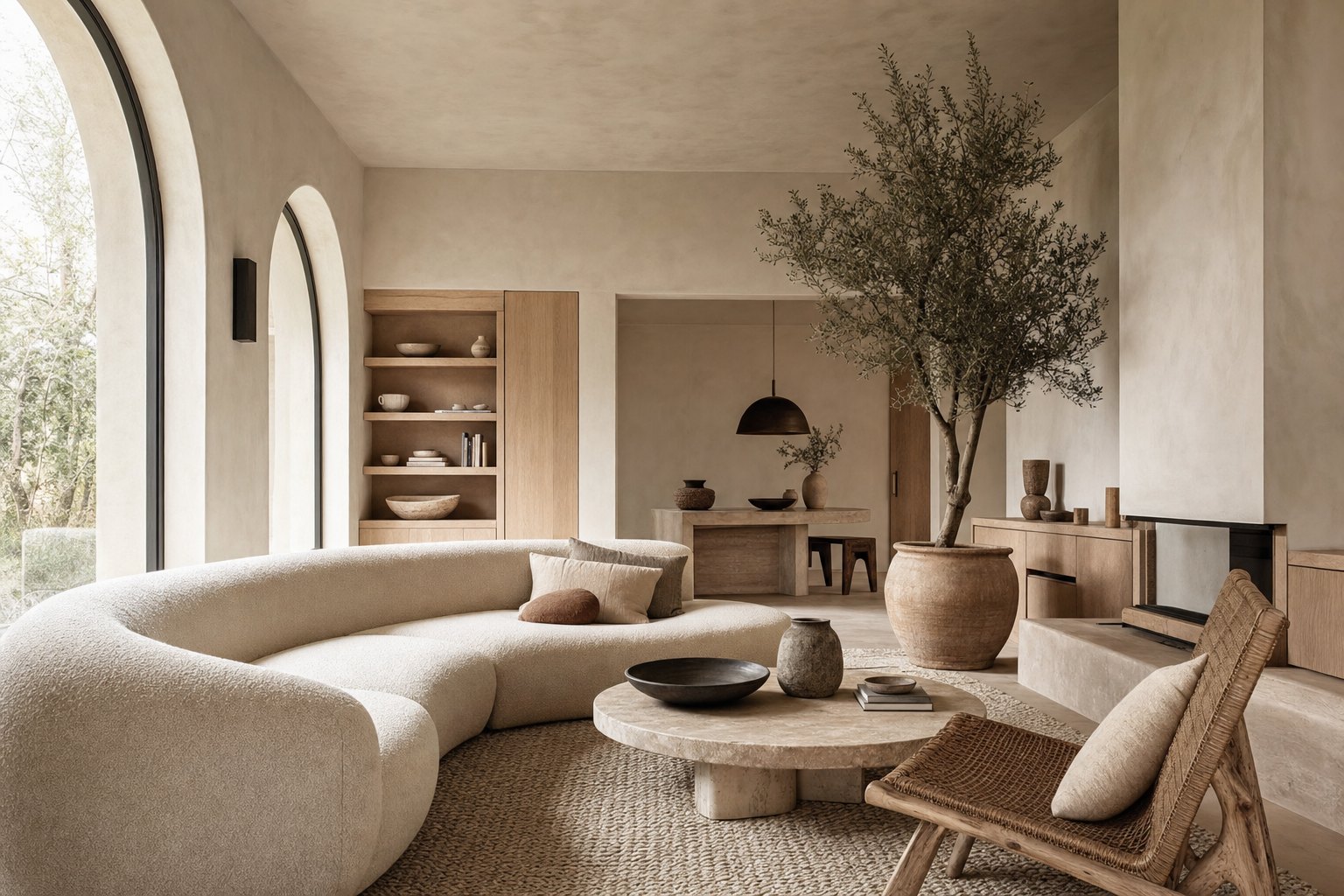
Organic Modern keeps modernism's clean lines but trades cool industrial finishes for limewash, oak, travertine, rattan, linen, boucle, and unglazed ceramics. Curves and cream, oat, clay, and brown tones make restraint feel comfortable.
Mountain / Boho Chic
Rustic shell · woven layers · relaxed global accents
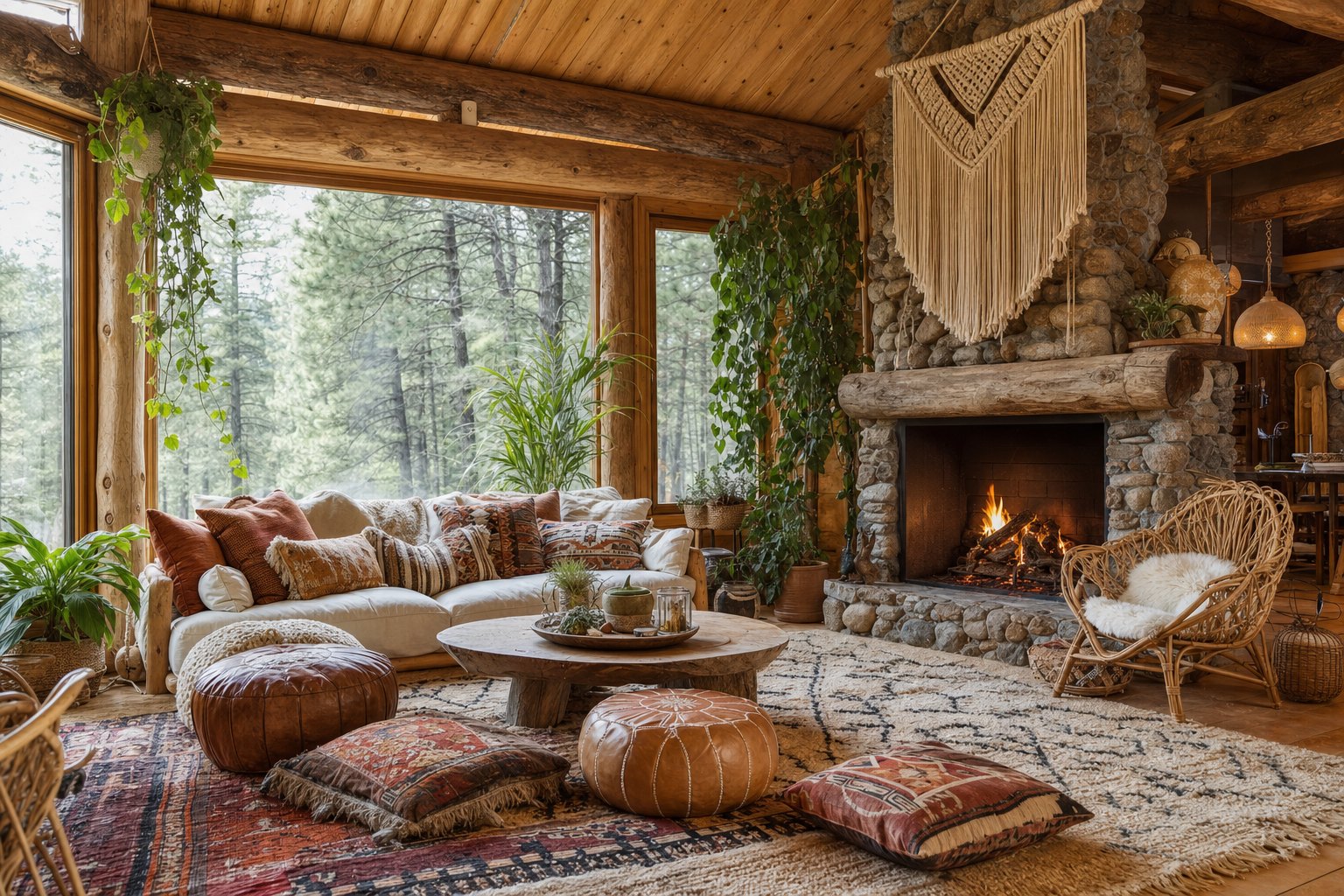
Mountain Boho starts with timber and stone, then lightens the lodge with kilim rugs, macramé, rattan, plants, leather poufs, and cream, camel, rust, and terracotta. It is rustic structure with a younger, softer layer.
Eclectic & Expressive
Mixing, drama, and personal collection take precedence over period purity.
Bohemian
Global textiles · low seating · collected abundance
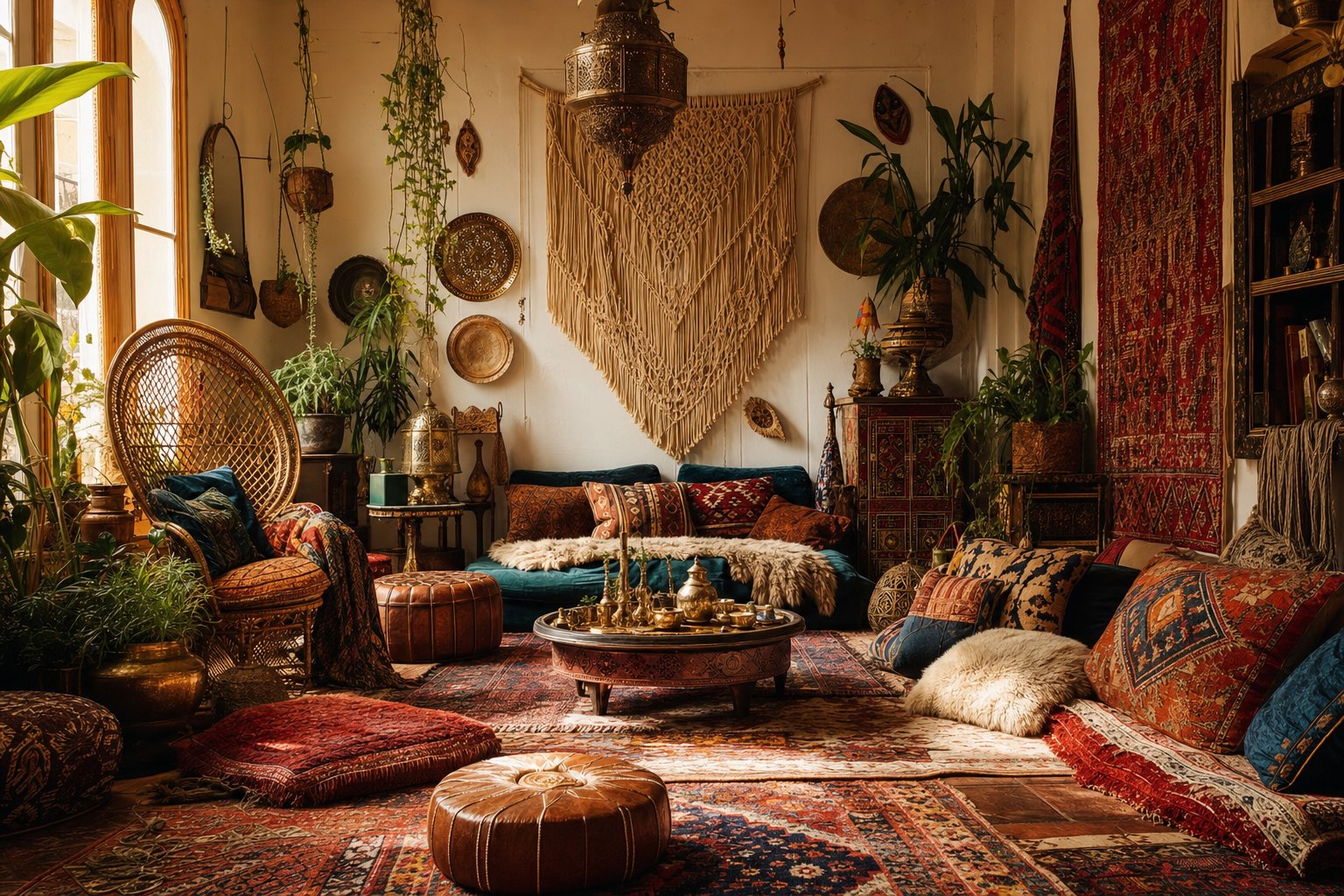
Bohemian rooms organize themselves around layered textiles and a well-traveled collection. Moroccan and Turkish rugs, floor cushions, cane, brass, vintage finds, macramé, plants, and saturated warm color work when a palette or material repeats.
Eclectic
Mixed periods · controlled palette · intentional tension
Eclectic design mixes periods with an underlying rule. A Victorian settee, modern table, and contemporary artwork can coexist when color, material, scale, or silhouette repeats. The organizing principle is what separates eclecticism from an unedited room.
Maximalist
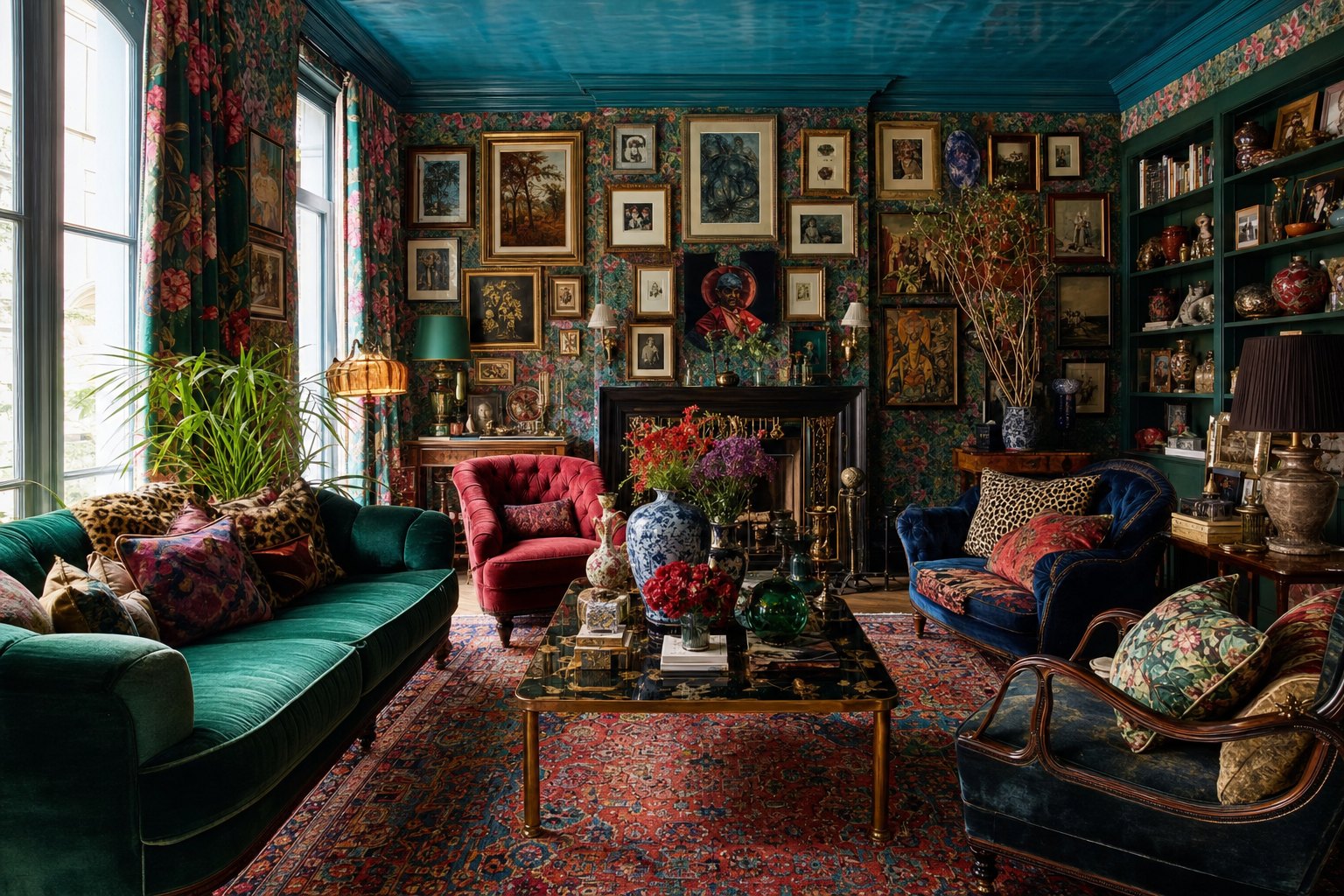
Pattern on pattern · saturated color · curated density
Maximalism treats more as a considered strategy. Wallpaper, patterned upholstery, gallery walls, bright paint, and collections fill the room, while repeated colors and motifs create rhythm and keep density from becoming visual noise.
Hollywood Glam
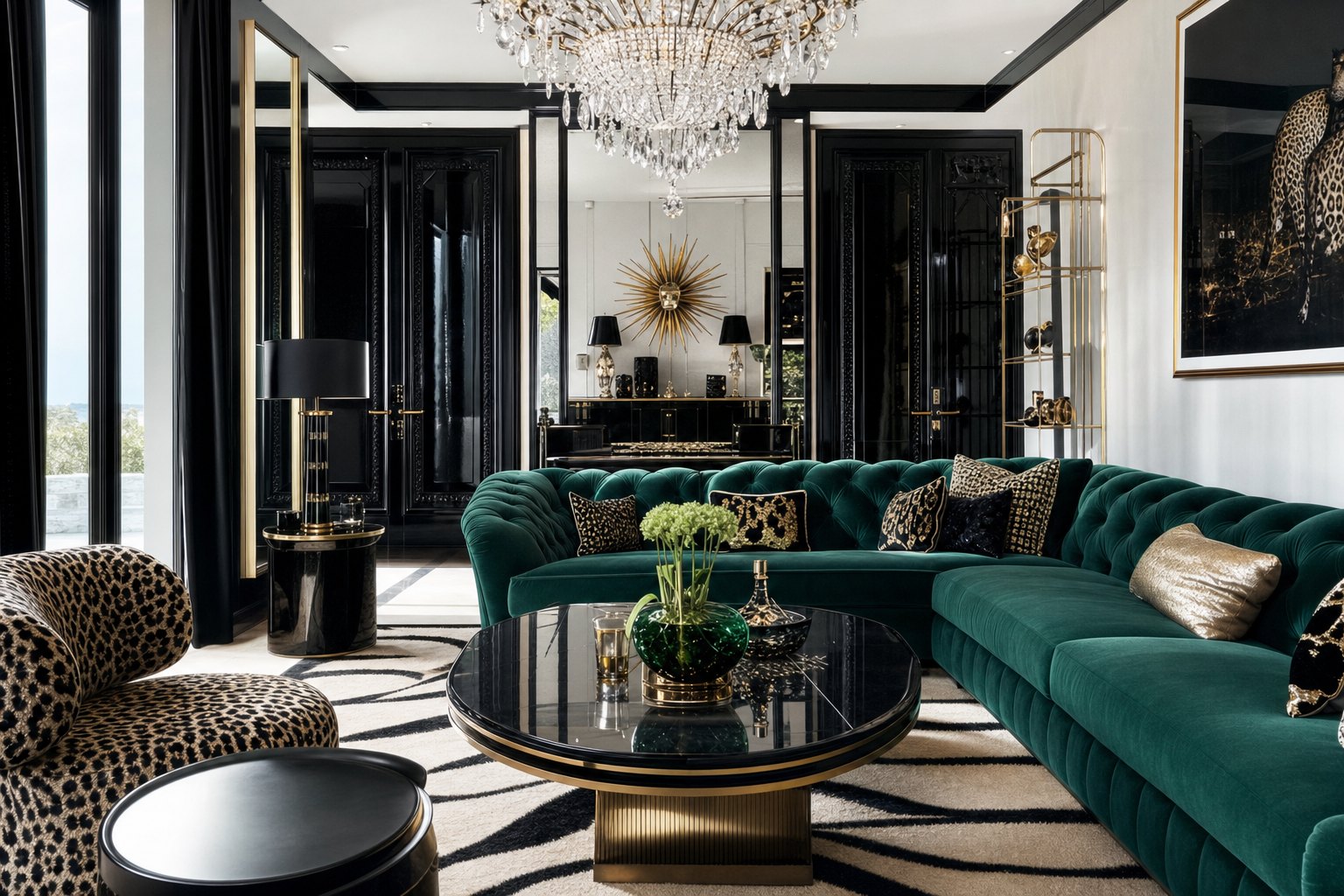
Mirrors and lacquer · velvet · theatrical contrast
Hollywood Glam descends from studio-era set design. Mirrored and lacquered surfaces, velvet, brass, crystal, animal print, tufting, bold black and white, and exaggerated lighting deliver drama without Art Deco's strict geometric discipline.
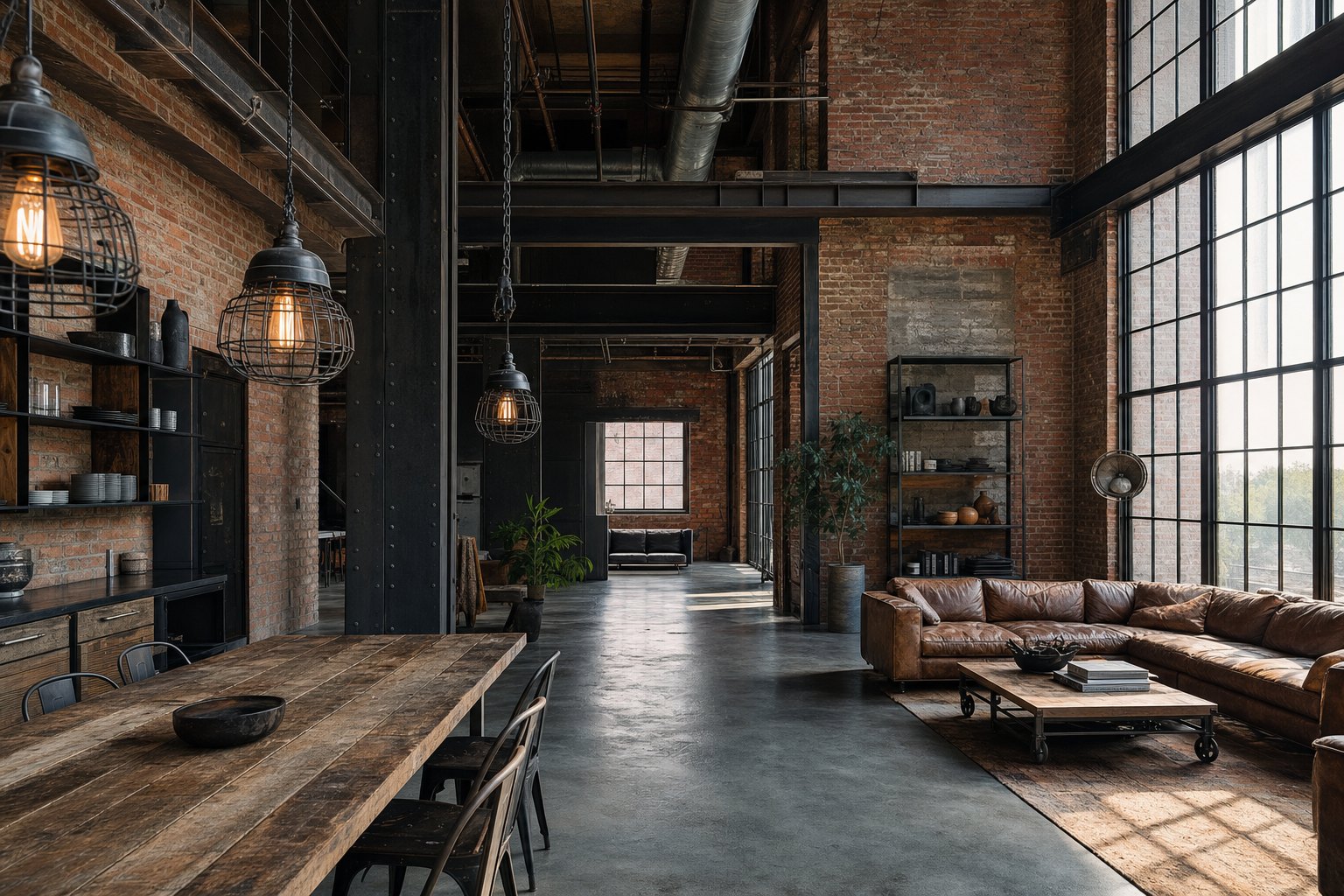
Industrial style preserves the working parts of converted factories and warehouses: brick, concrete floors, steel, ducts, pipes, and open ceilings. Reclaimed wood, blackened metal, leather, and task lights furnish the generous volume without hiding it.
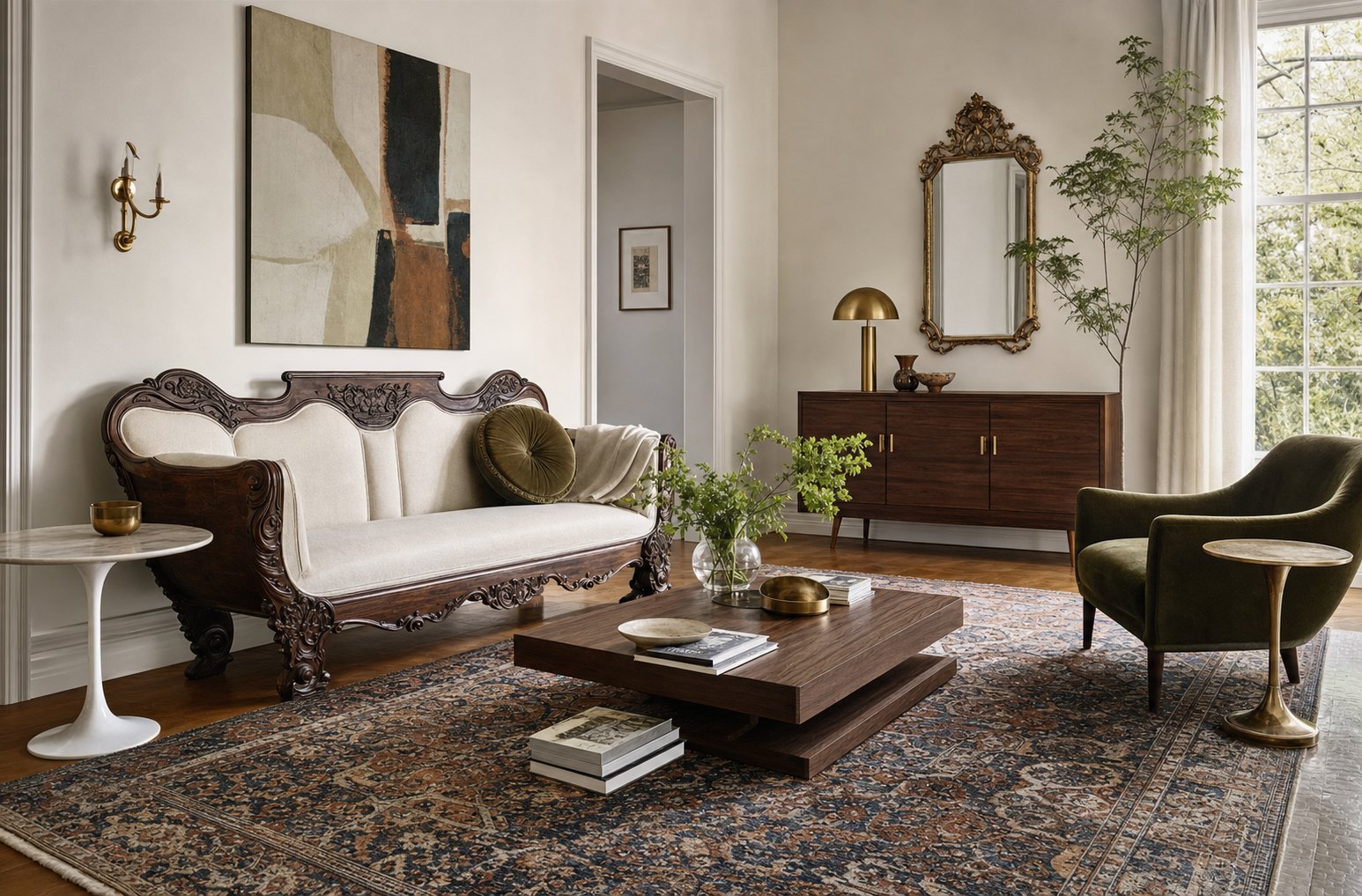
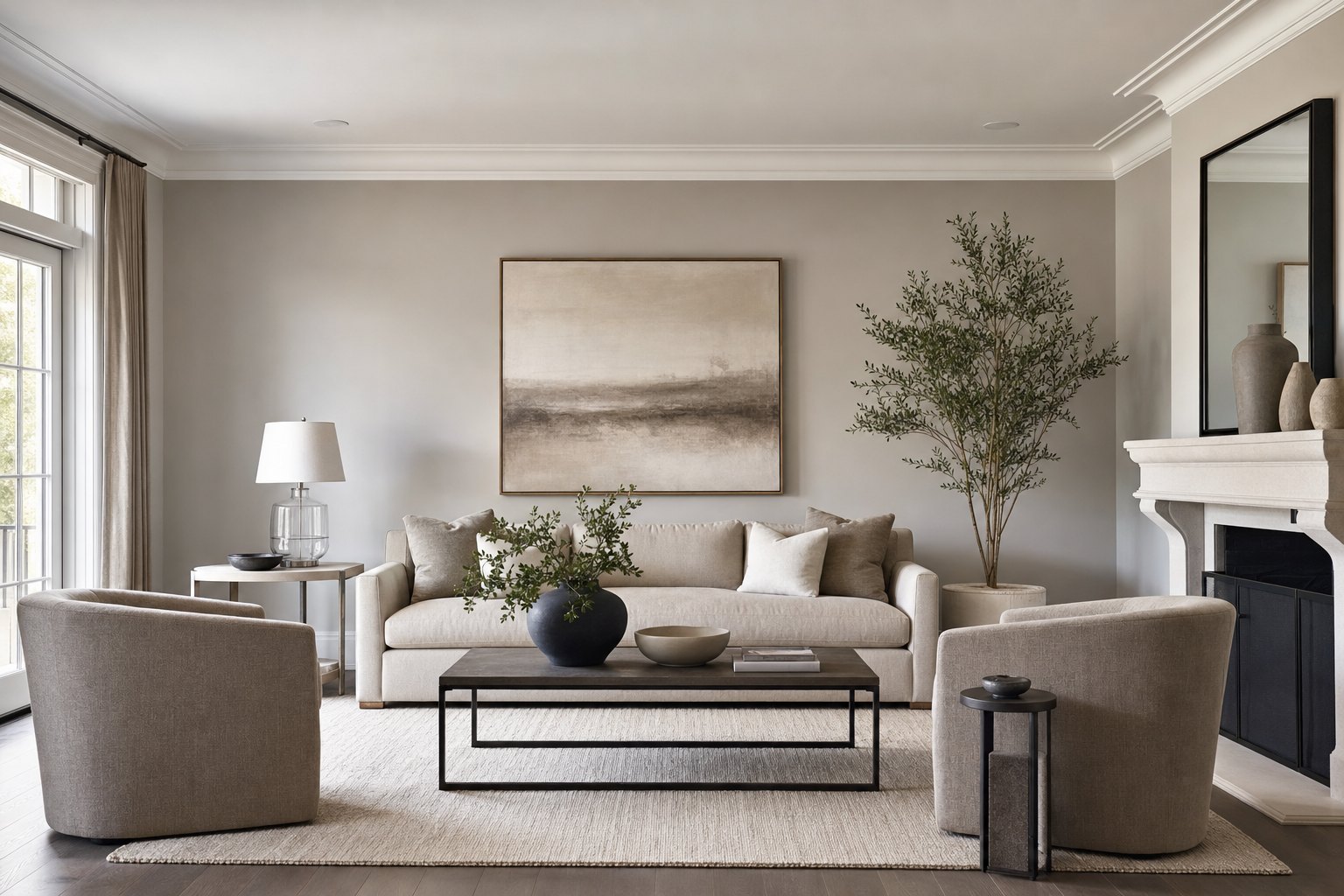
Transitional names the middle most homes occupy. Traditional silhouettes lose their ornament, contemporary finishes clean up the room, and texture replaces busy pattern. Cream, taupe, soft grey, and a few large accessories keep it comfortable and resale-safe.
Five easy-to-confuse boundaries
Modern vs. Contemporary: Modern is a fixed twentieth-century movement. Contemporary means current, so its definition keeps changing.
Scandinavian vs. Japandi: Both value light wood and restraint. Japandi adds lower forms, asymmetry, imperfection, and darker contrast.
Traditional vs. Transitional: Traditional preserves historical ornament and pattern. Transitional simplifies the same furniture language inside a quieter room.
Bohemian vs. Maximalist: Bohemian builds from global textiles and collected informality. Maximalism can use any vocabulary as long as density is deliberate.
Mediterranean vs. Tuscan: Mediterranean is broad, coastal, and sun-bleached. Tuscan is the heavier Italian-farmhouse branch in warmer earth tones.
Minimalist vs. Organic Modern: Both edit aggressively. Organic Modern adds tactile natural materials, rounded furniture, and a visibly warmer palette.
Style is the last layer
A style changes what a room looks like, but it does not solve the room. Circulation, daylight, storage, acoustics, comfortable proportions, and useful places to sit matter longer than any palette. Get those underlying systems right and style becomes what it should be: a flexible vocabulary for expressing character, not a substitute for function.
All 33 images are AI-generated illustrations made for this guide. They are examples of the visual vocabulary, not photographs of built interiors. The taxonomy was informed by current reference guides from House Beautiful and DesignFiles; boundaries between categories remain porous.